
A prosthetic receiver is a precision connection component used with a compatible male pyramid in a modular lower-limb prosthetic system. Although the component is relatively small, its internal pyramid interface, locking screw positions, wall thickness and external geometry all require careful dimensional control.
Sunrise Industrial manufactures titanium, stainless steel and aluminum prosthetic components according to customer drawings and samples. Custom receiver designs can be produced as individual adapters or integrated into socket adapters, tube clamp adapters, double-ended adapters and other modular connection components.

What Is a Prosthetic Pyramid Receiver?
A pyramid receiver is the female side of a modular pyramid connection. The internal opening accepts the corresponding male pyramid, while threaded screws positioned around the receiver provide the required connection and adjustment according to the component design.
The receiver may be manufactured as a compact standalone component or incorporated into a larger adapter. The basic interface concept can therefore appear in many different prosthetic component designs.
Receiver Geometry Is More Than an Opening Diameter
It is easy to describe a receiver only by its opening size, but the functional geometry is more complex. The internal profile, depth, surrounding wall, screw locations and mating surfaces work together as one interface.
For custom manufacturing, Sunrise Industrial uses the approved customer drawing as the production reference. When an existing sample is supplied, dimensional inspection can also help establish the geometry required for a replacement or related OEM component.
Key Features of a Prosthetic Receiver
| Feature | Manufacturing Focus |
|---|---|
| Internal Opening | Size, depth and mating geometry |
| Internal Profile | Contact relationship with the corresponding pyramid |
| Threaded Holes | Thread size, depth and angular position |
| Wall Thickness | Relationship between internal and external geometry |
| External Shape | Weight, machining access and adapter integration |
| Reference Surfaces | Position of the receiver relative to the complete adapter |
Pyramid and Receiver Fit
A receiver should be considered together with the male pyramid that it is designed to accept. Matching only one nominal dimension does not necessarily define the complete interface.
The pyramid profile, receiver profile, contact surfaces and locking screw arrangement should therefore be reviewed as an assembly. This is particularly important when developing a family of modular components intended to use the same connection geometry.
Why Consistent Interfaces Matter in a Component Family
OEM prosthetic product ranges often contain several adapters using the same basic pyramid and receiver connection. A socket adapter, tube clamp adapter and double-ended adapter may have very different external shapes while still sharing a common modular interface.
Keeping the functional interface consistent can reduce unnecessary variation between related components and make repeat manufacturing easier to control.
Titanium for Prosthetic Receiver Components
Ti-6Al-4V is frequently specified for precision-machined prosthetic connection components because it combines useful mechanical properties, corrosion resistance and relatively low component weight.
The material grade should always follow the approved drawing or project specification. Material selection should not be changed solely because two receiver designs have similar dimensions.
Stainless Steel and Aluminum Receiver Options
Receiver components can also be produced from stainless steel or aluminum when required by the customer's design. Each material has different density, machining behavior and finishing characteristics.
For an OEM product family containing several materials, drawings should clearly identify the required material for each part number to avoid confusion between geometrically similar components.
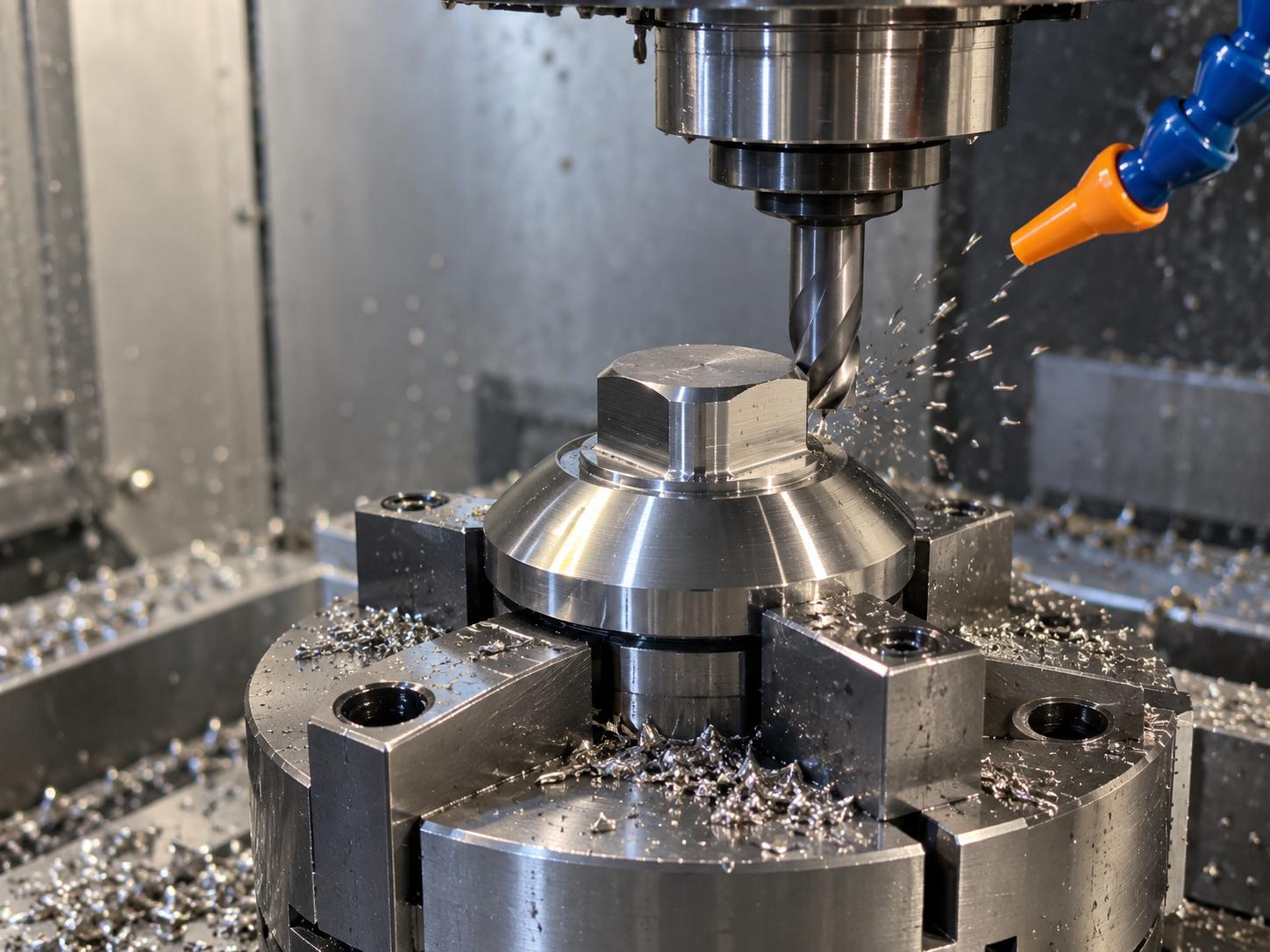
CNC Turning of the Receiver Body
Many receiver designs contain circular outside diameters, shoulders, bores and reference faces that can be established by CNC turning. These features create a controlled foundation for subsequent milling, drilling and threading operations.
Machining references should be planned around the functional interface so that the internal receiver geometry remains correctly positioned relative to the rest of the adapter.
CNC Milling of the Internal Receiver Profile
The internal connection is one of the most important areas of a pyramid receiver. Depending on the design, CNC milling can be used to produce non-circular internal surfaces and other features that cannot be completed through turning alone.
Tool access becomes more important when the receiver is deep or when the surrounding walls limit the available machining space. The manufacturing process should therefore be considered while reviewing a new receiver design.
Threaded Locking Holes
Multiple threaded holes are commonly positioned around a receiver for locking or adjustment screws. Their thread specification, depth, angular spacing and position relative to the internal pyramid interface should be clearly defined.
Thread quality is only one part of the requirement. The direction in which the screw approaches the mating pyramid and the intended contact position can also influence the final assembly.
Screw Tip and Contact Geometry
Different designs may use screws with flat, rounded or other specified tip geometries. When screw contact with the male pyramid is important to the design, the screw specification should be supplied together with the receiver drawing.
Reviewing a section view or assembled CAD model can be useful for confirming how the screw tip contacts the mating component before production begins.
Wall Thickness and Compact Receiver Designs
Reducing the outside diameter of a receiver can make the component appear more compact and reduce material, but the internal interface still requires sufficient machining space and drawing-defined wall thickness.
A smaller outside diameter can therefore increase manufacturing difficulty when the internal opening remains unchanged. External size, internal geometry and machining access should be evaluated together rather than independently.
Receiver Integration in Socket Adapters
Socket adapters can incorporate a female pyramid receiver directly into the component body. In these designs, the receiver geometry must be positioned correctly relative to the socket-side mounting structure.
The external adapter may include mounting holes, curved surfaces, petals or other drawing-defined features while maintaining the same internal modular connection.
Receiver Integration in Tube Clamp Adapters
A tube clamp adapter may combine a receiver interface with a clamp designed around a specified prosthetic tube diameter. This creates two functional interfaces within one CNC-machined component.
The receiver geometry, clamp diameter, slot, fastening screw and overall body dimensions should therefore be inspected according to the complete drawing rather than treating the receiver as an isolated feature.
Receivers in Double-Ended and Sliding Adapters
Receiver interfaces are also used in longer double-ended adapters and adjustable or sliding adapter designs. These components can introduce additional machining considerations such as deep bores, longer bodies and multiple alignment features.
Using a common receiver geometry across these related products can help create a more consistent modular component family.
Surface Finishing
Prosthetic receivers may be supplied with a machined finish or receive additional surface treatment according to the customer's specification. Depending on material and design, secondary processes can include blasting, polishing, anodizing or other specified finishes.
Functional threads and precision mating areas should be considered before surface treatment so that the finished dimensions remain consistent with the drawing requirements.
Inspection of Prosthetic Receivers
| Inspection Area | Typical Check |
|---|---|
| Receiver Opening | Drawing-defined size and profile |
| Internal Depth | Depth relative to reference surfaces |
| Threaded Holes | Thread, position and depth |
| External Dimensions | Diameter, height and drawing-defined geometry |
| Interface Position | Relationship to the complete adapter body |
| Surface Condition | Burr removal and specified finish |
Prototype Receivers for New Designs
Prototype production is useful when developing a new receiver geometry or standardizing an interface across several related prosthetic components. Small quantities allow dimensional and assembly details to be reviewed before repeat production.
When both mating components are available, checking the receiver together with the corresponding pyramid can provide more useful information than inspecting either component independently.
Custom Receiver Manufacturing from Drawings or Samples
Sunrise Industrial can manufacture custom receiver components from customer-supplied 2D drawings and 3D models. Existing physical samples can also be used as a reference when developing a related component or evaluating replacement manufacturing.
For new projects, drawings should identify critical dimensions, tolerances, material, thread specifications and surface requirements. Mating pyramid information is also helpful when the receiver interface itself is being developed or modified.
What to Include in a Prosthetic Receiver RFQ
Information Helpful for Quotation
Please provide the 2D drawing and 3D model when available, required material, receiver dimensions, pyramid interface details, threaded hole specifications, locking screw information, surface finish and estimated quantity. A mating pyramid drawing or sample can also be useful for custom interface projects.
Custom Prosthetic Receiver Manufacturing from Sunrise Industrial
Sunrise Industrial manufactures receivers, pyramid adapters, socket adapters, tube clamp adapters, tube adapters, double-ended adapters, sliding adapters and other modular prosthetic components according to customer drawings and samples. CNC turning, milling, multi-axis machining and dimensional inspection can support prototype, small-batch and repeat OEM production.
Need Custom Titanium Prosthetic Receivers?
Send us your receiver drawing, mating pyramid information, material, surface finish and quantity for machining review and quotation.
Contact UsAbout Sunrise Industrial
Sunrise Industrial is an ISO 9001:2015 precision CNC machining and custom component manufacturer. We manufacture prosthetic components, titanium CNC machined parts, titanium dental discs, titanium sputtering targets, titanium fasteners and other drawing-based custom components for OEM projects.