
A prosthetic pylon is a structural tube used to connect modular components in a lower-limb prosthetic assembly. In many modular systems, a 30mm outside diameter tube provides the connection between components such as tube adapters, tube clamp adapters, knee-related components and foot-side adapters.
Titanium is a practical material for prosthetic pylons because it combines relatively low weight with good mechanical properties and corrosion resistance. Sunrise Industrial manufactures titanium tubes and drawing-based prosthetic components for OEM customers, including components designed around 30mm modular tube connections.
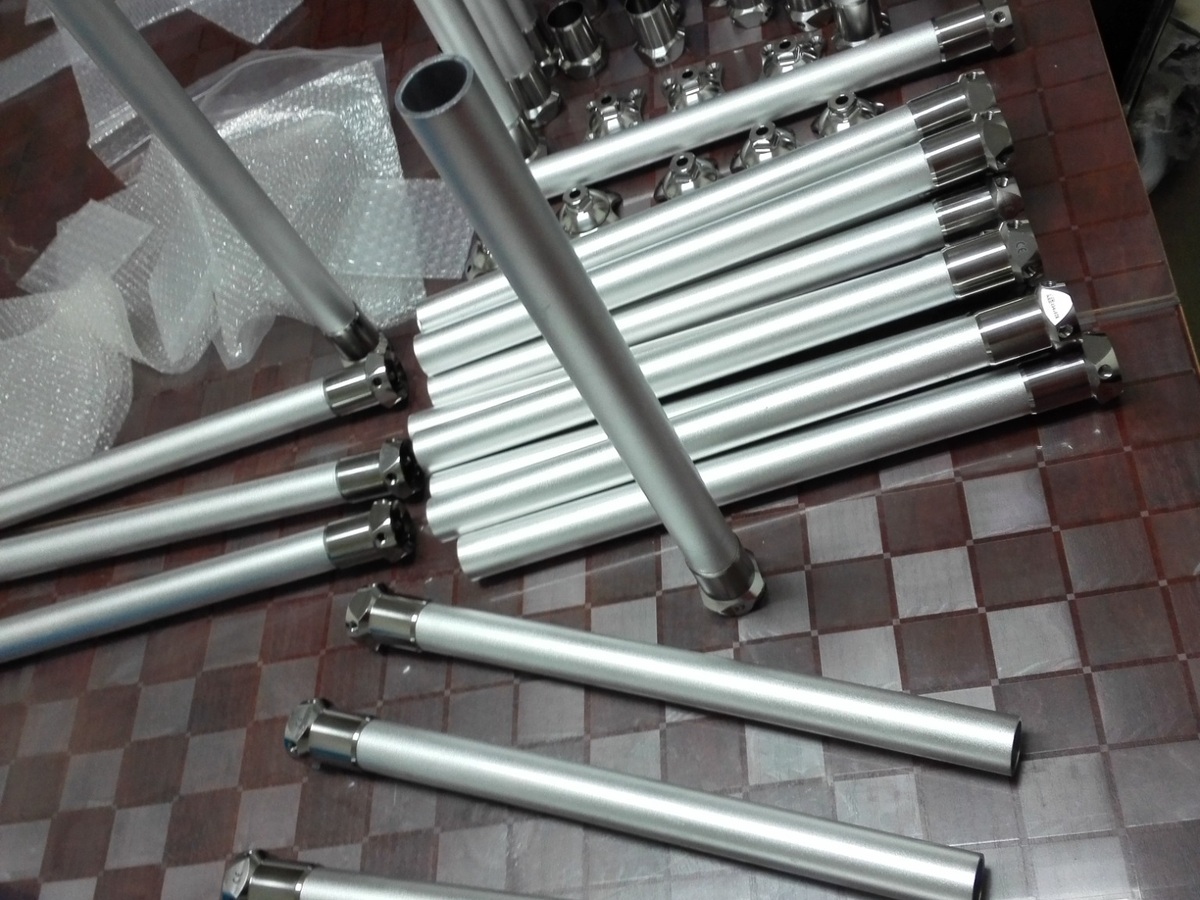
What Is a Prosthetic Pylon?
In a modular lower-limb prosthetic system, the pylon is the tubular structural section positioned between other modular components. Depending on the complete assembly, it can connect to a tube clamp adapter, tube adapter or another component designed to accept the corresponding tube diameter.
Although the geometry of a straight pylon appears simple, its outside diameter, wall thickness, straightness, cut length, end condition and surface quality all affect manufacturing consistency and assembly.
Why 30mm Is an Important Prosthetic Tube Size
A 30mm tube connection is widely used in modular prosthetic component designs. This allows different components within a compatible system to be connected through a common tubular interface.
For manufacturing purposes, however, “30mm pylon” should not be treated as a complete specification. The drawing should also define the outside diameter tolerance, inside diameter or wall thickness, tube length, material and any required end or surface condition.
Key Dimensions of a Titanium Prosthetic Pylon
| Feature | Manufacturing Consideration |
|---|---|
| Outside Diameter | Compatibility with the corresponding tube clamp or adapter |
| Wall Thickness | Material usage, tube weight and drawing requirements |
| Inside Diameter | Controlled by tube specification and required wall thickness |
| Overall Length | Cut length and finished end-to-end dimension |
| Straightness | Important for consistent modular assembly |
| End Condition | Squareness, chamfer, deburring and surface condition |
Titanium Materials for Prosthetic Pylons
Titanium alloys are attractive for pylon applications where low component weight and corrosion resistance are important. The exact titanium grade should follow the customer's drawing and product design rather than being selected only from the tube dimensions.
Ti-6Al-4V is frequently used for precision titanium components, while commercially pure titanium grades are also available for applications with different material requirements. Material certificates can be matched to the ordered material specification when required by the project.
Pylon Length and Custom Cutting
OEM customers may require pylons in several finished lengths rather than one standard size. Cutting the tube close to the finished dimension is only the first step; the ends may subsequently require facing and deburring to obtain a clean, consistent finished component.
When several lengths belong to the same product family, maintaining the same tube specification while changing only the finished length can simplify purchasing and production planning.
Wall Thickness and Weight
Wall thickness has a direct influence on the amount of titanium in the finished pylon and therefore also affects component weight. It should be determined as part of the product design and clearly specified on the drawing or tube specification.
A thinner wall is not automatically the better manufacturing choice. Dimensional stability, material availability and the requirements of the complete prosthetic design should be considered together.
Outside Diameter and Tube Clamp Fit
The relationship between the pylon outside diameter and the corresponding tube clamp adapter is one of the most important interface considerations. A tube that is nominally described as 30mm still requires an appropriate dimensional tolerance for consistent assembly.
For an OEM component family, using a consistent tube specification across related tube clamps, tube adapters and pylons can help reduce unnecessary interface variation.
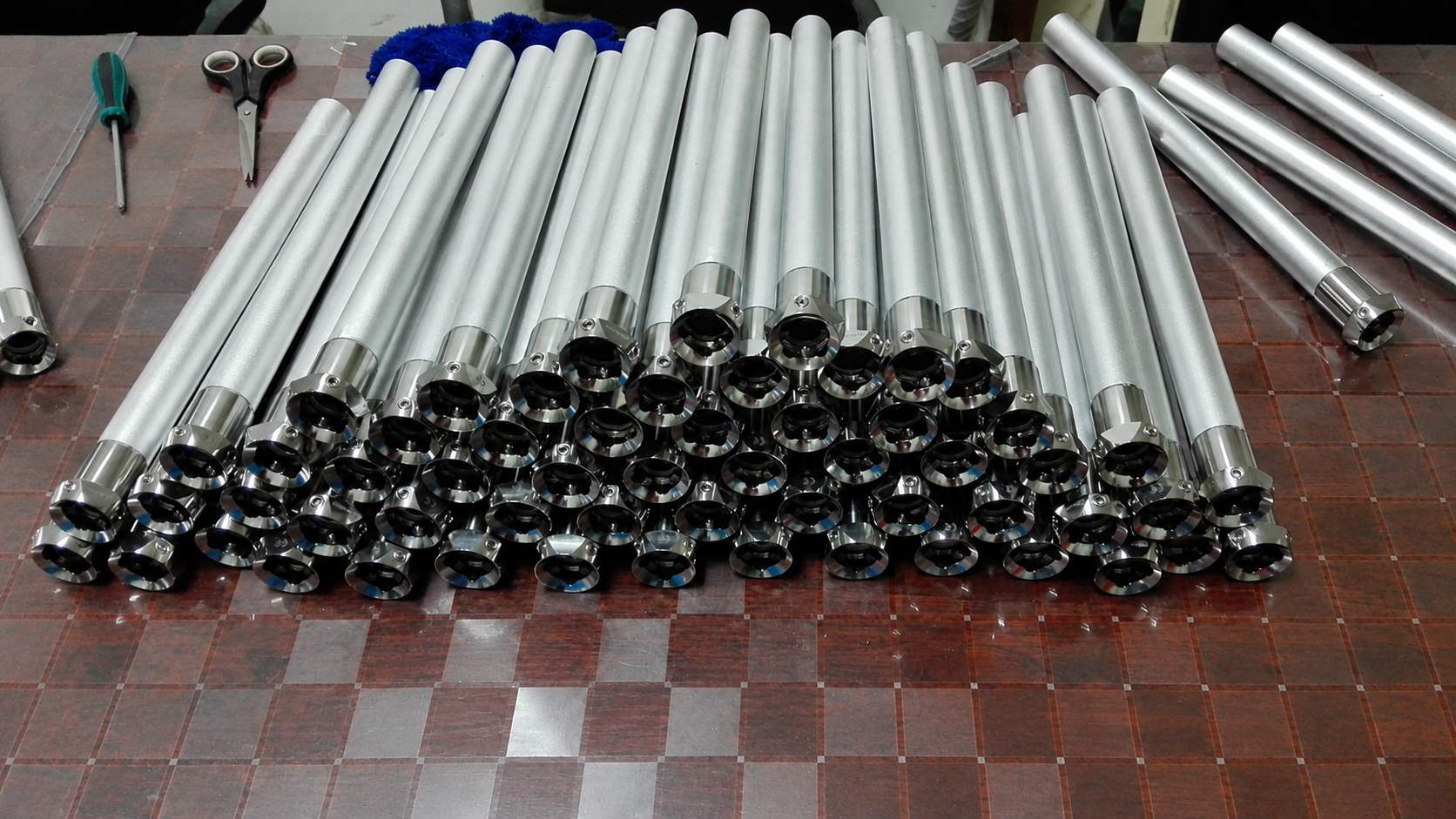
Cutting and End-Face Machining
Titanium tube can be cut to the required approximate length and then finished according to the drawing. When tighter length or end-face requirements are specified, machining can be used to establish a clean and controlled final surface.
The machining method should avoid unnecessary deformation of the tube while providing sufficient support during cutting and finishing operations.
Deburring the Inside and Outside Edges
Tube cutting can leave burrs on both the outside and inside edges. These should be removed so that the finished pylon has clean ends and can be handled and assembled without interference from remaining sharp material.
Where a drawing specifies an edge break or chamfer, this feature should be controlled separately from general manual deburring.
Surface Finish of Titanium Pylons
The external surface of a prosthetic pylon may be supplied with a tube mill finish, machined finish, polished appearance or another customer-specified surface condition. The appropriate finish depends on both functional and appearance requirements.
Because part of the tube surface may contact a clamp or other mating component, surface treatment should be considered together with dimensional requirements rather than as an independent cosmetic operation.
Inspection of 30mm Prosthetic Tubes
Inspection requirements depend on the drawing, but typical checks include outside diameter, wall thickness or inside diameter, finished length, straightness, end condition and overall surface quality.
For repeat production, consistent inspection references help maintain the same tube-to-adapter relationship from one production batch to the next.
Pylons and Tube Clamp Adapters
A pylon is normally used together with other modular components rather than as an isolated part. Tube clamp adapters provide a mechanical connection around the tube, while the opposite side of the adapter may incorporate a pyramid, receiver or another modular interface.
When a manufacturer is producing both the pylon-related components and the corresponding adapters, drawings can be reviewed together to identify whether the specified interfaces are dimensionally consistent.
Pylons and Prosthetic Tube Adapters
Tube adapters can incorporate a tubular section or provide a transition between a 30mm tube interface and another prosthetic connection. Depending on the design, these components may be machined from solid material or combined with a tube section.
For bonded or assembled designs, the relationship between the tube inside diameter, mating component outside diameter and required joining process should be clearly defined before production.
Titanium Pylons vs. Aluminum and Stainless Steel
Titanium, aluminum and stainless steel have different densities, mechanical properties, machining characteristics and surface finishing options. As a result, two pylons with the same external dimensions can have noticeably different weights and material behavior.
Material selection should follow the approved prosthetic component design. For custom manufacturing, Sunrise Industrial can review titanium, stainless steel and aluminum components according to the material specified by the customer.
Custom Features Beyond a Straight Tube
Not every pylon-related component is simply a straight cut tube. OEM designs can include locally machined diameters, grooves, holes, slots, threaded features or integrated adapter sections.
These parts can require a combination of tube processing and CNC machining. Providing both 2D drawings and 3D models helps distinguish functional dimensions from general tube geometry.
Prototype and Small-Batch Requirements
New prosthetic component projects may initially require only a small quantity of pylons or tube-related parts for dimensional and assembly evaluation. Prototype production is particularly useful when a new tube specification or mating adapter is being introduced.
After dimensions and interfaces are confirmed, the same manufacturing references can be used for repeat OEM batches with different required lengths or quantities.
What to Include in a Titanium Pylon RFQ
| RFQ Information | Example Requirement |
|---|---|
| Material | Titanium grade specified on drawing |
| Tube Size | Outside diameter and tolerance |
| Wall | Wall thickness or inside diameter |
| Length | Finished tube length and tolerance |
| Surface | Specified external and end condition |
| Quantity | Prototype, small batch or repeat production quantity |
Information Helpful for Quotation
Please provide the required titanium grade, tube outside diameter, inside diameter or wall thickness, finished length, tolerances, surface requirement and quantity. For machined pylon assemblies or related adapters, 2D drawings and 3D models are recommended.
Titanium Prosthetic Pylon Manufacturing from Sunrise Industrial
Sunrise Industrial supplies titanium materials and manufactures drawing-based prosthetic components including tube clamp adapters, tube adapters, socket adapters, pyramid adapters, receivers, double-ended adapters and other modular connection parts. Custom machining can be combined with titanium tube requirements for OEM prosthetic component projects.
Need 30mm Titanium Pylons or Custom Tube Components?
Send us your tube specification, drawing, required material, length, surface finish and quantity for manufacturing review and quotation.
Contact UsAbout Sunrise Industrial
Sunrise Industrial is an ISO 9001:2015 precision CNC machining and custom component manufacturer. We manufacture prosthetic components, titanium CNC machined parts, titanium dental discs, titanium sputtering targets, titanium fasteners and other drawing-based custom components for OEM projects.