
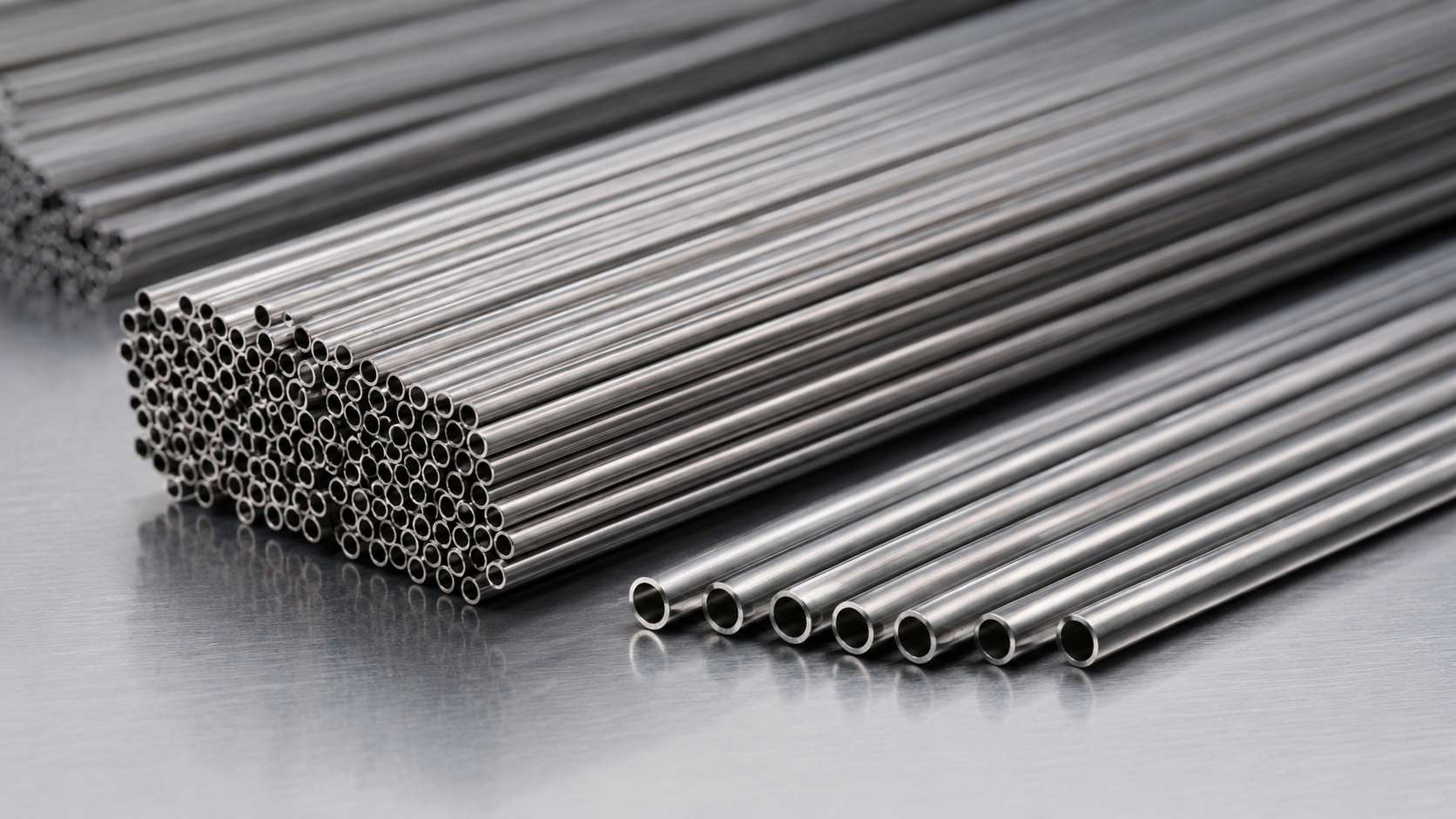
Titanium capillary tubes are small-diameter precision tubes used when a project requires corrosion resistance, low component weight and controlled tube dimensions. Compared with conventional larger titanium tubing, capillary tubes typically require greater attention to outside diameter, inside diameter, wall thickness, straightness and end condition.
Sunrise Industrial supplies titanium capillary tubes and small-diameter titanium tubing according to project specifications. Tubes can also be cut to length or further processed with CNC machining, drilling, slotting, threading and other drawing-based features when required.
What Is a Titanium Capillary Tube?
A titanium capillary tube is a small-diameter tubular product with a relatively small internal passage. Depending on the project, the term may refer to very fine tubing or more generally to small precision titanium tubes where outside diameter, inside diameter and wall thickness need controlled dimensions.
Capillary tubing should therefore be specified by actual dimensions rather than by product name alone. Two products described as titanium capillary tubes may have very different outside diameters, bore sizes, wall thicknesses and tolerance requirements.
Important Dimensions for Small Diameter Titanium Tubes
| Specification | Why It Matters |
|---|---|
| Outside Diameter | Controls installation size and fit with mating components |
| Inside Diameter | Defines the internal passage and available clearance |
| Wall Thickness | Influences tube rigidity, weight and processing difficulty |
| Length | May be supplied as longer tubing or cut-to-length pieces |
| Straightness | Important for long and small-diameter precision components |
| End Condition | Cut, faced, chamfered, deburred or drawing-specific |
Why Titanium Is Used for Precision Tubing
Titanium combines relatively low density with good corrosion resistance and useful mechanical properties. These characteristics make small titanium tubes suitable for selected precision instruments, industrial equipment, chemical processing systems, medical-related components and custom engineering assemblies.
The suitability of a titanium tube still depends on the complete operating environment. Pressure, temperature, fluid or chemical exposure, mechanical load and connection method should be considered when selecting material grade and tube dimensions.
Grade 2 Titanium Capillary Tubes
Grade 2 commercially pure titanium is commonly considered for tubing applications where corrosion resistance and practical fabrication characteristics are important. It can be supplied in different tube sizes according to project requirements.
For an RFQ, the material should be identified clearly as Grade 2 or by the required material specification rather than simply stating pure titanium. This helps avoid uncertainty when material certificates or specific project standards are required.
Grade 5 Titanium Small Diameter Tubing
Ti-6Al-4V Grade 5 may be selected when a project requires higher mechanical strength than commercially pure titanium. Small Grade 5 tube components can also be used as starting material for precision machined tubular parts.
Because Grade 5 and Grade 2 have different mechanical and processing characteristics, material grade should be determined by the engineering requirement rather than treated as an interchangeable option.
Thin Wall Titanium Tubes
Reducing wall thickness can lower component weight and increase the available internal passage for a given outside diameter. However, thin-wall titanium tubing also requires more careful handling and secondary processing because the tube can be easier to deform during clamping, cutting or machining.
When very thin walls are required, the drawing should identify the acceptable dimensional tolerance and any critical roundness or straightness requirements. These details help determine whether the requested tube is practical to supply and process.
Cut-to-Length Titanium Capillary Tubes
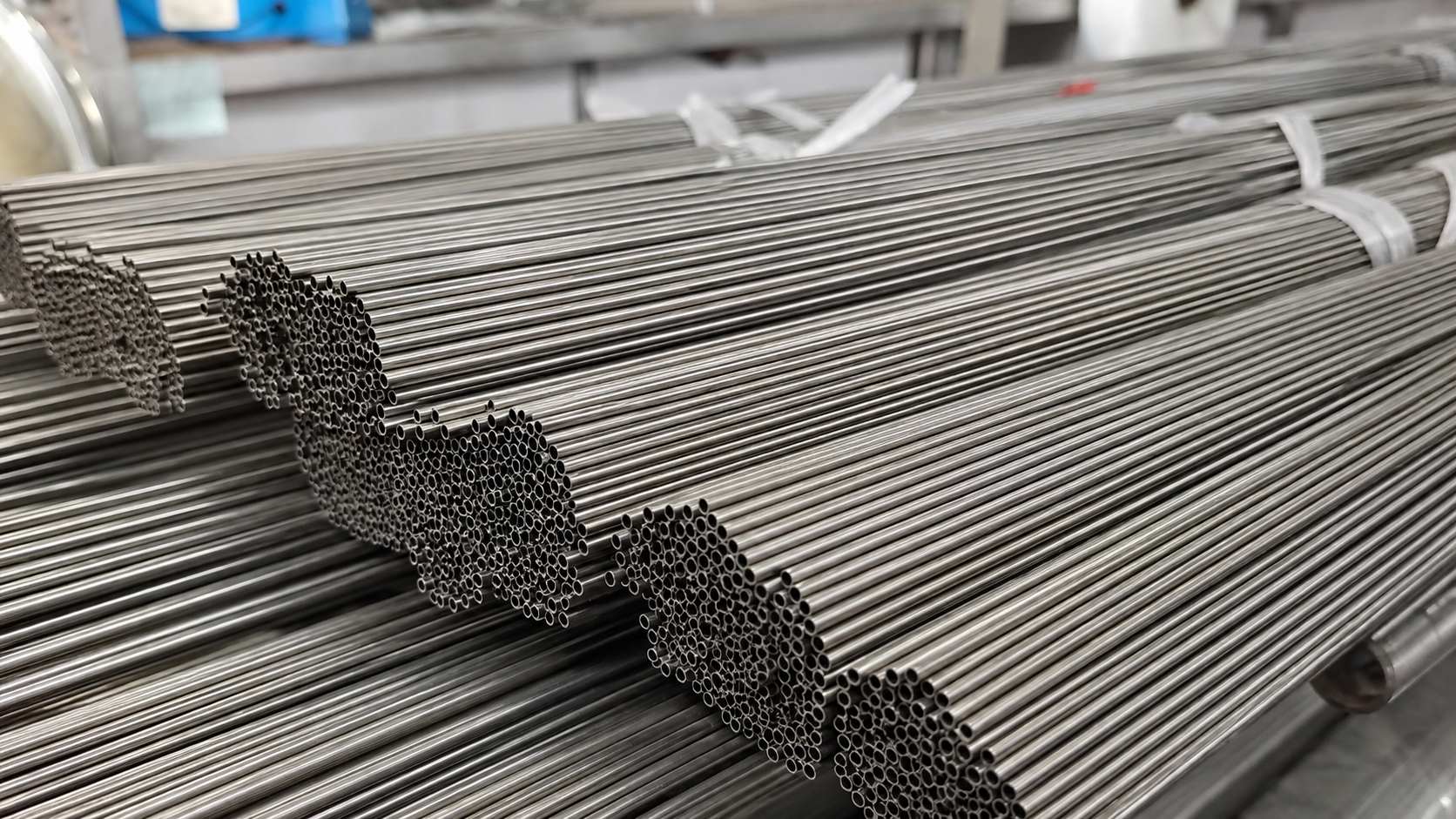
Many projects do not require full-length tubing. Small titanium tubes can be supplied as cut-to-length blanks so that customers receive pieces closer to their final assembly dimensions.
Length tolerance and end condition should be specified when the cut tube will be used directly in an assembly. A rough-cut blank and a precision-faced tube component require different manufacturing operations and should not be quoted as the same product.
CNC Machining Small Titanium Tube Components
A capillary tube can also become the raw material for a more complex precision component. Drawing-based tube parts may require faced ends, grooves, reduced diameters, threads, cross holes, slots or other machined details.
Small and thin-wall tubes need suitable workholding so that clamping pressure does not unnecessarily distort the part. The machining method should therefore be selected according to tube diameter, wall thickness, feature geometry and required tolerance.
Drilling and Cross-Hole Features
Some precision tube components include radial holes or multiple small openings along the tube wall. Their diameter, quantity, spacing and angular position should be clearly identified on the drawing.
Deburring is particularly important around small holes because burrs on the inside of a narrow tube can be difficult to access after machining. Hole design and inspection requirements should therefore be reviewed before production.
Threaded Ends and Connection Features
When wall thickness and component design allow, small titanium tube parts may include external threads or other connection features at the ends. Additional sleeves, collars or thicker sections may also be incorporated in a custom assembly depending on the design.
Thread size, pitch, usable length and mating requirements should be included on the 2D drawing so that the finished connection can be inspected correctly.
Surface Condition and Tube Ends
Surface requirements vary between projects. Titanium tubing may be supplied with a material-production surface, polished surface or additional preparation depending on specification and intended use.
For cut and machined tube components, the end surface may also require facing, chamfering or deburring. These details are especially important when the end face serves as an assembly reference or sealing-related surface.
Tolerance Considerations for Small Diameter Tubing
Tolerance requirements should reflect the actual function of the tube. Applying unnecessarily tight tolerances to every dimension can limit material availability and increase processing or inspection cost.
It is often more practical to identify the dimensions that directly affect assembly or performance and apply suitable tolerances to those critical features while using standard material tolerances elsewhere.
Inspection of Titanium Capillary Tubes
| Inspection Item | Typical Check |
|---|---|
| Outside Diameter | Diameter and tolerance |
| Inside Diameter | Bore size and internal passage |
| Wall Thickness | Nominal thickness and allowable variation |
| Length | Overall length and cut tolerance |
| Straightness | Project-specific straightness requirement |
| Machined Features | Threads, grooves, holes, slots and end details |
From Titanium Tube Material to Finished Precision Components
For some OEM projects, purchasing tube material and arranging secondary machining separately creates additional handling and supplier coordination. Drawing-based production can instead combine tube selection, cutting and precision machining into one manufacturing route.
This is particularly useful for small tubular components where the finished part includes several features beyond the original tube dimensions.
What to Include in a Titanium Capillary Tube RFQ
The most useful RFQ information includes titanium grade, outside diameter, inside diameter or wall thickness, required length, quantity, tolerance and surface condition. For machined tube components, a 2D drawing and 3D file should also identify holes, grooves, threads and other special features.
If the requirement is based on an existing sample, dimensional information and the intended mating components can help with manufacturing review.
Information Helpful for Quotation
Please provide the titanium grade, outside diameter, inside diameter or wall thickness, length, tolerance, quantity and surface requirement. For custom machined titanium tube components, please also send the 2D drawing and 3D model when available.
Titanium Capillary Tubes and Custom Tube Components from Sunrise Industrial
Sunrise Industrial supplies titanium tubes, titanium capillary tubes and custom titanium tubular components for precision machining and industrial projects. Available support includes material supply, cut-to-length preparation and drawing-based CNC machining according to project requirements.
Need Titanium Capillary Tubes or Custom Tube Parts?
Send us your tube dimensions, titanium grade, tolerance, quantity and drawing requirements for manufacturing review and quotation.
Contact UsAbout Sunrise Industrial
Sunrise Industrial is an ISO 9001:2015 precision CNC machining and custom component manufacturer. We manufacture prosthetic components, titanium CNC machined parts, titanium dental discs, titanium sputtering targets, titanium fasteners and other drawing-based custom components for OEM projects.