
Prosthetic sliding adapters are adjustable mechanical connectors used in selected modular lower-limb prosthetic systems. Unlike fixed-position adapters, sliding designs provide a controlled range of translational adjustment, allowing the position of one connection interface to be changed relative to another before the assembly is secured.
For prosthetic OEM manufacturers, a sliding adapter presents specific machining challenges. Guide surfaces must be produced consistently, mating components must fit as designed, and locking features must be manufactured according to the approved engineering specification.
Sunrise Industrial manufactures custom CNC-machined prosthetic components from customer drawings, including titanium, aluminum and stainless steel adapter parts. This guide focuses on sliding adapter construction, precision machining, material selection, dimensional inspection and the information OEM buyers should provide when requesting a quotation.
What Is a Prosthetic Sliding Adapter?
A prosthetic sliding adapter is a modular connector incorporating a mechanism that permits positional adjustment along a defined path. Depending on the design, the adjustment may be used to establish a specified offset between the socket-side connection and another prosthetic component.
The sliding mechanism may use a machined guide slot, dovetail-type interface, rail or other proprietary geometry. A separate locking feature secures the selected position according to the OEM's assembly instructions.
Typical structural elements may include:
- Sliding base or guide body
- Movable connection block
- Machined guide surfaces
- Locking screws or clamping features
- Pyramid, receiver or socket-side connection interfaces
- Positioning references or adjustment limits
Not every sliding adapter includes all of these features. The exact construction depends on the customer's design, intended assembly and mechanical requirements.
Sliding Adjustment vs Fixed Prosthetic Connectors
Fixed prosthetic adapters establish a defined connection geometry without an integrated sliding adjustment mechanism. Sliding adapters introduce an additional mechanical interface that allows controlled positional changes during fitting or assembly.
This additional adjustability also introduces manufacturing considerations that are less prominent in a simple fixed connector.
The guide interface must maintain its specified geometry, the movable component must fit within the designed clearance, and the locking system must function according to the approved design.
The available adjustment range and final locked position are design-specific. They should not be assumed from another manufacturer's adapter or from visual similarity alone.
Precision CNC Machining of Sliding Guide Surfaces
The guide interface is one of the defining features of a prosthetic sliding adapter. It may contain parallel surfaces, angled guide walls, a machined channel or another form of controlled sliding geometry.
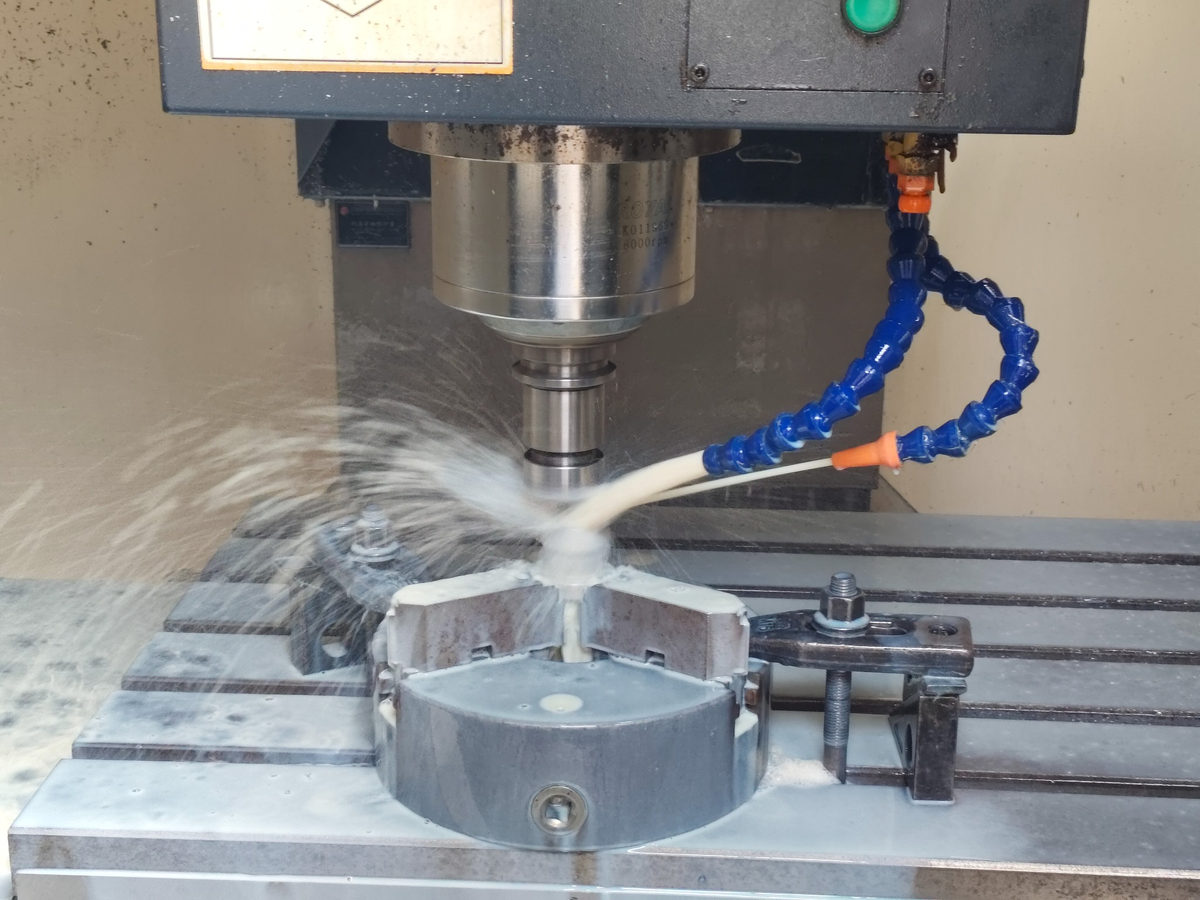
CNC milling is commonly used to manufacture these features. Depending on the design, machining may require multiple operations to establish the base geometry, guide profile, mounting holes and locking features.
Guide Width and Profile
The width and profile of the guide affect how the movable component fits within the adapter body. These dimensions should be controlled according to the approved drawing and mating-part requirements.
Parallelism and Alignment
Where the guide contains opposing functional surfaces, their geometric relationship may influence assembly movement and contact. Parallelism, angular relationships and position should be inspected where specified.
Surface Finish
Surface roughness can affect contact behavior and the consistency of adjustment. The required finish depends on the guide design, material pairing and any surface treatment.
Edge Finishing
Burrs and sharp edges should be addressed without changing the functional guide geometry. Excessive polishing or uncontrolled material removal may alter the fit between mating parts.
Locking Screws and Adjustment Retention Features
After the required position has been selected, a sliding adapter must be secured using the locking arrangement specified by the OEM.
Depending on the design, this may involve threaded fasteners, clamping surfaces, locking blocks or other retention features.
Manufacturing considerations include thread size and depth, screw seating surfaces, contact geometry, positional relationships and accessibility during assembly.
The machining supplier can manufacture these features to the approved drawing, but the adequacy of the locking mechanism, specified tightening torque and resistance to movement under service loads must be established by the product designer through appropriate validation.
Titanium vs Aluminum for Prosthetic Sliding Adapters
Titanium alloys and high-strength aluminum alloys are both used in various precision prosthetic components. The appropriate material depends on the intended application, geometry, mechanical requirements and customer specification.
| Consideration | Ti-6Al-4V Titanium | 7075-T6 Aluminum |
|---|---|---|
| Density | Higher than aluminum | Lower than titanium |
| Mechanical Characteristics | High strength-to-weight ratio | High strength among common aluminum alloys |
| Machining | Requires careful cutting conditions and tool management | Generally efficient to machine |
| Surface Considerations | Contact wear and galling require design evaluation | Surface treatment and contact wear require evaluation |
For sliding interfaces, material selection should consider more than static strength. Contact wear, friction, surface condition, material pairing and locking behavior are also relevant. The OEM should establish these requirements before approving production.
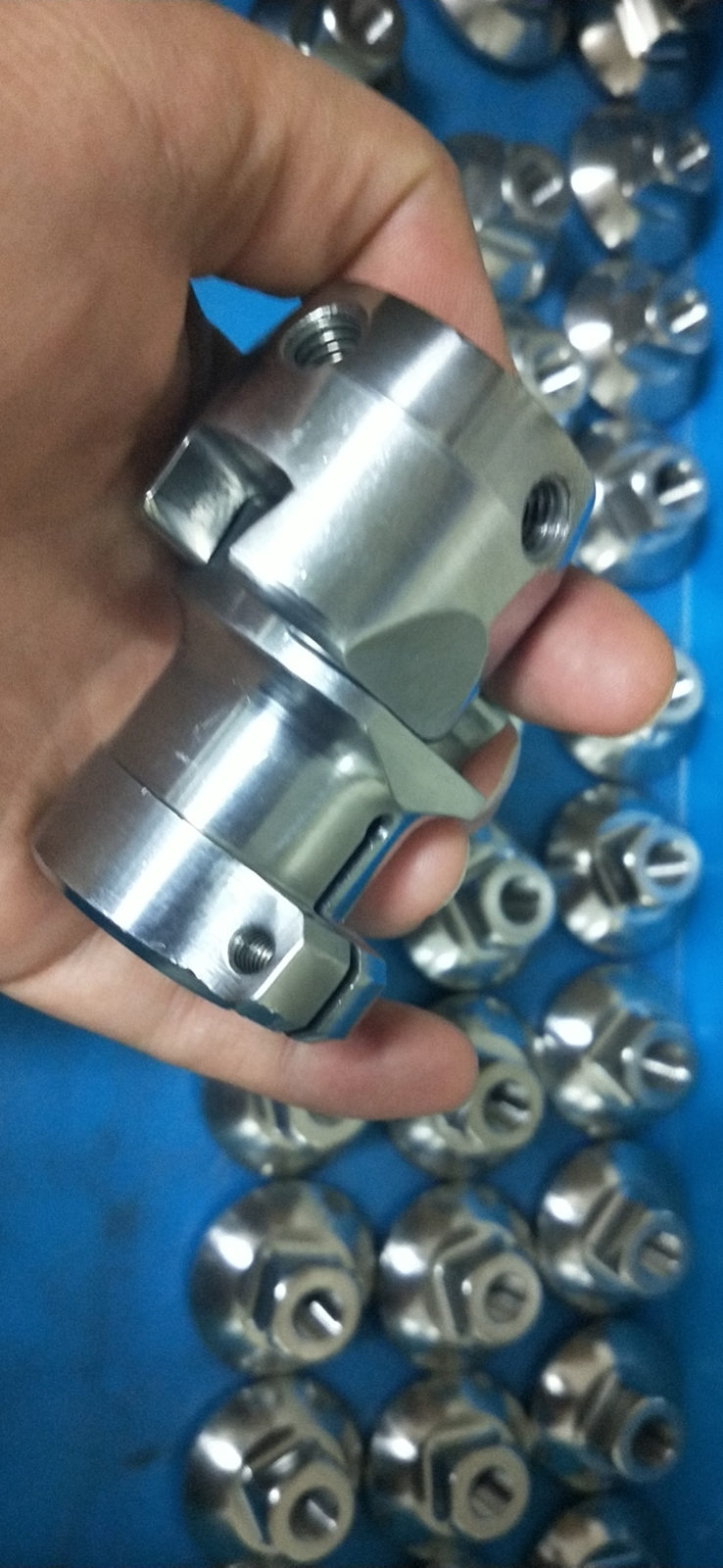
CNC Milling of Adapter Bodies and Mating Components
A custom sliding adapter may contain two or more machined components that must work together as an assembly.
The manufacturing sequence can include raw material preparation, rough milling, finish machining of guide surfaces, drilling, tapping, deburring and dimensional inspection.
Where the adapter includes cylindrical connection features, CNC turning or turn-mill machining may also be appropriate.
Suitable workholding and machining datums are important because guide surfaces, mounting holes and connector features may need to maintain defined geometric relationships.
For repeat OEM production, controlled machining programs, fixtures and inspection criteria can help maintain consistency between batches.
Dimensional Inspection and Assembly Fit
Inspection of a prosthetic sliding adapter should focus on the dimensions and geometric relationships identified as critical by the customer.
Depending on the design, these may include:
- Guide width and profile
- Guide surface parallelism or angular geometry
- Movable block dimensions
- Mounting hole positions
- Thread specifications
- Adjustment travel limits
- Connector interface dimensions
- Surface finish of functional contact areas
Inspection methods may include micrometers, calipers, gauges, optical measuring equipment and coordinate measuring methods where required.
Trial assembly with approved mating parts may help identify dimensional interference or fit issues. However, successful assembly does not replace structural testing, fatigue testing or validation of the locking mechanism.
Prototype Development and OEM Production
Sliding adapters can be particularly suitable for an initial prototype review because their functional interfaces depend on the relationship between multiple components.
A prototype can help the OEM assess dimensional fit, adjustment travel, assembly accessibility and manufacturing feasibility.
Any required design changes should be incorporated into an approved drawing revision before repeat production.
Sunrise Industrial supports drawing-based prototype evaluation, small-batch CNC machining and recurring OEM component orders according to the agreed manufacturing specifications.
Custom Modular Prosthetic Connector Manufacturing
In addition to sliding adapter components, modular prosthetic systems may require other precision-machined connectors, receivers, tube clamp bodies and attachment interfaces.
These components can contain different combinations of CNC-turned profiles, milled flats, transverse openings, internal threads and clamping features.
Although each design has different functional requirements, controlled machining and inspection are equally important for producing components that match the customer's engineering drawings.
What Affects the Manufacturing Cost?
The cost of a custom prosthetic sliding adapter depends on its construction and manufacturing requirements.
- Number of components: Multi-part assemblies require separate machining operations and inspection.
- Guide geometry: Complex channels and mating profiles can increase tooling and setup requirements.
- Material: Titanium, aluminum and stainless steel have different raw material and machining costs.
- Tolerances: Critical guide dimensions may require additional finishing and measurement.
- Threads and locking features: Multiple threaded details add machining and inspection operations.
- Surface treatment: Additional finishing processes may affect both cost and dimensional fit.
- Quantity: Prototype and repeat production orders distribute setup costs differently.
For accurate quotation, the manufacturer should receive drawings for all required components rather than only an external assembly image.
What Should Buyers Include in an RFQ?
For custom prosthetic sliding adapter projects, useful quotation information includes:
- 2D drawings and STEP models for each machined component
- Assembly drawing showing the mating relationships
- Required material grades
- Critical guide dimensions and tolerances
- Thread and fastening specifications
- Surface finish and treatment requirements
- Prototype or production quantities
- Inspection and documentation requirements
- Expected delivery schedule
Where an existing sample is available, it may support an initial manufacturing assessment. Final production dimensions and acceptance criteria should still be confirmed through approved technical documentation.
Custom Prosthetic Sliding Adapter Machining at Sunrise Industrial
Sunrise Industrial is a precision CNC machining manufacturer based in Xi'an, China. Our manufacturing scope includes custom prosthetic adapter components, pyramid connectors, receivers, tube clamp parts and other modular mechanical components.
We machine titanium, aluminum and stainless steel components according to customer drawings using CNC turning, milling and related precision machining processes.
For sliding adapter projects, we can review guide bodies, movable blocks, threaded connection features and other custom-machined parts according to the engineering requirements and available manufacturing capability.
Sunrise Industrial operates under an ISO 9001:2015 quality management system and can provide agreed machining-related inspection and material documentation.
Our role is to manufacture components according to approved drawings. The OEM or finished-device manufacturer remains responsible for design validation, structural testing, applicable medical-device compliance and final product approval.
Frequently Asked Questions
What is the purpose of a prosthetic sliding adapter?
A sliding adapter provides a controlled positional adjustment between modular prosthetic connection interfaces. Its adjustment range and intended use depend on the specific design.
Can prosthetic sliding adapters be manufactured from titanium?
Yes. Titanium alloys can be considered for custom sliding adapter components, subject to the OEM's material, structural and contact-surface requirements.
Is aluminum suitable for adjustable prosthetic connectors?
Aluminum alloys such as 7075-T6 may be used in appropriately designed components. The OEM must evaluate strength, wear, surface treatment and other application requirements.
Can Sunrise Industrial machine dovetail-type sliding guides?
Suitable dovetail-type and other guide profiles can be evaluated from customer drawings. Machining feasibility depends on the geometry, dimensions, material and required tolerances.
Can you manufacture both the sliding body and movable block?
Sunrise Industrial can review multiple mating components as part of a custom CNC machining project, based on the supplied assembly and component drawings.
Does dimensional inspection confirm the locking strength?
No. Dimensional inspection verifies specified geometry. Locking performance, structural strength and fatigue behavior require separate validation by the OEM.
Can you produce prototype quantities before larger orders?
Yes. Prototype and small-batch machining requests can be evaluated according to the drawing, material and manufacturing requirements.
Need Custom Prosthetic Sliding Adapters?
Sunrise Industrial provides drawing-based CNC machining for prosthetic sliding connectors, adjustable adapter bodies, pyramid interfaces, receivers and other precision modular components.
Send us your engineering drawings, material requirements and estimated quantities. Our team can review machining feasibility and prepare a quotation for suitable OEM projects.
Request a CNC Machining Quote Contact Sunrise Industrial