
Pyramid receivers are important connection components in modular lower-limb prosthetic systems. Their internal interface connects with a compatible male pyramid, while threaded adjustment holes around the receiver provide the connection structure required by the customer's prosthetic assembly design.
For a CNC manufacturer, a pyramid receiver is more than a simple bored component. Receiver geometry, threaded-hole position, wall thickness, concentricity and the relationship between mating features all need to be considered during machining and inspection. Sunrise Industrial manufactures prosthetic receivers and related adapters according to customer drawings, samples and project specifications.

What Is a Prosthetic Pyramid Receiver?
A prosthetic pyramid receiver is a female connection component designed to mate with a compatible male pyramid in a modular prosthetic assembly. The receiver may be incorporated into a socket adapter, tube adapter, double-ended adapter, sliding adapter or another connection component.
Different prosthetic systems can use different receiver dimensions and surrounding structures. For this reason, the mating interface should be manufactured according to the approved drawing or confirmed sample rather than treated as one universal geometry.
Common Receiver Configurations
| Receiver Type | Typical Structure |
|---|---|
| Standard Pyramid Receiver | Female interface with surrounding threaded adjustment holes |
| 4-Hole Receiver Adapter | Receiver integrated with a four-hole mounting base |
| Rotating Receiver | Receiver incorporated into a structure designed for rotational adjustment |
| Double-Ended Receiver Adapter | Receiver connection combined with another modular interface in an extended adapter body |
Receiver Geometry and the Male Pyramid Interface
The internal receiver geometry is one of the primary functional areas of the component. It must correspond to the mating pyramid specified by the customer so that the two components can be assembled as intended.
Important drawing features may include the receiver opening, internal angled surfaces, depth, surrounding wall thickness and the position of the adjustment screws relative to the pyramid. When custom components are developed as a family, maintaining a consistent pyramid and receiver interface can also simplify compatibility between related adapters.
Threaded Adjustment Holes
Several threaded holes are commonly positioned around a pyramid receiver. Their thread specification, angular position, depth and relationship to the receiver surface need to follow the assembly drawing.
Thread quality is particularly important because these holes are repeatedly used during component assembly and adjustment. CNC drilling and tapping, followed by thread inspection and careful deburring, help maintain consistent production quality.
Titanium, Stainless Steel and Aluminum Receivers
Material selection depends on the complete adapter design, target weight, mechanical requirements, surface finish and customer specification. Titanium, stainless steel and aluminum can each be suitable for different receiver and prosthetic adapter projects.
| Material | Manufacturing Consideration |
|---|---|
| Titanium Alloy | Combines relatively low weight, strength and corrosion resistance for precision-machined adapters |
| Stainless Steel | Used where durability, strength and cost are important project considerations |
| Aluminum | Useful for lightweight designs when the specified alloy and component structure are suitable for the application |
CNC Machining Considerations
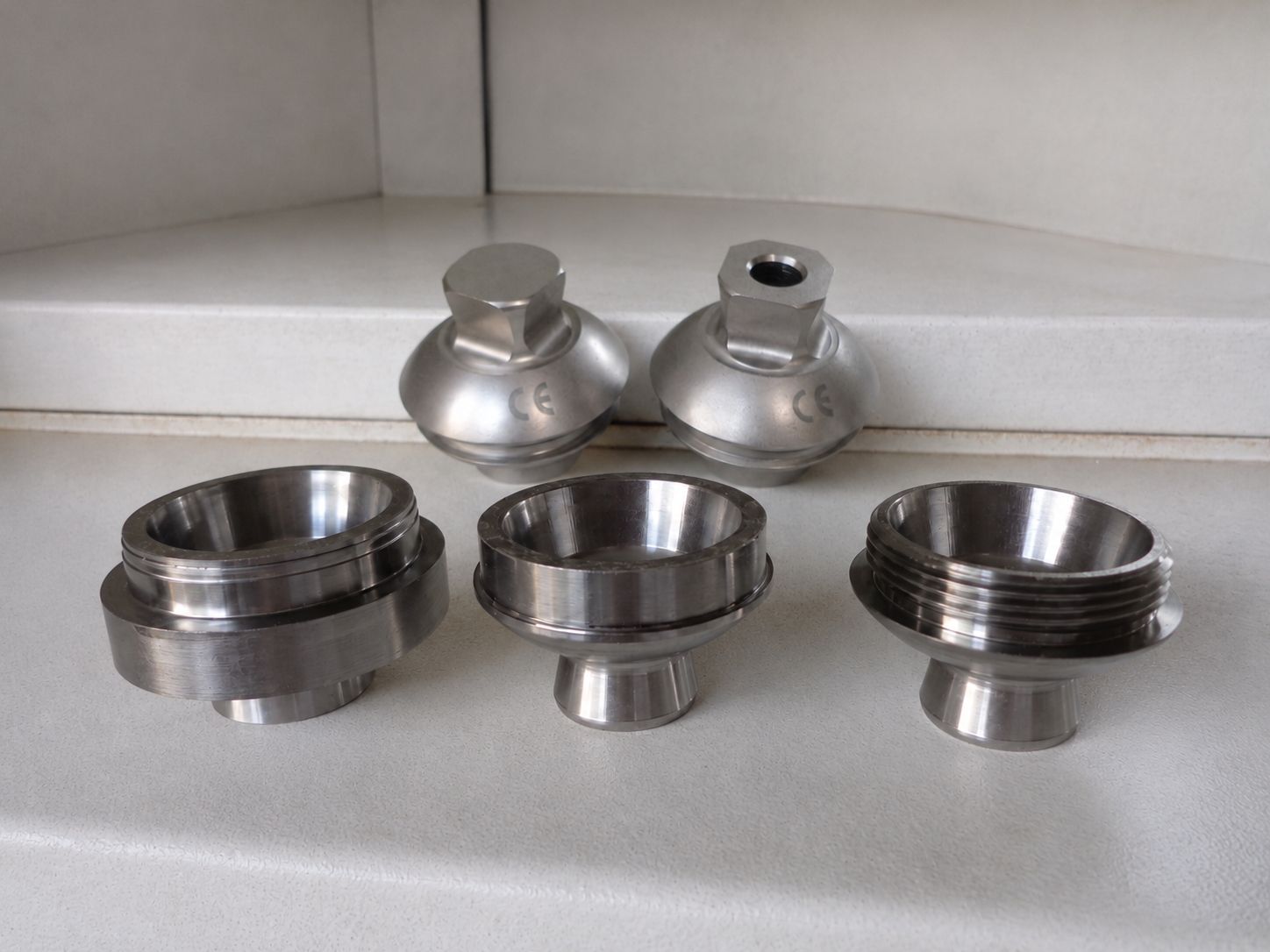
Receiver components often combine turned and milled features. CNC turning can establish the primary cylindrical surfaces, bores and reference diameters, while milling, drilling and tapping operations produce the surrounding holes, flats, mounting structures and other design-specific details.
Where the receiver is integrated into a more complex socket or sliding adapter, additional machining operations may be required. Stable workholding and suitable datum selection help maintain the dimensional relationship between the receiver interface and the rest of the component.
Why Concentricity and Hole Position Matter
The receiver opening, external body and other connection features are often produced from different machining directions. Controlling their relationship helps ensure that the finished component matches the intended assembly geometry.
The position of threaded adjustment holes is also important. Hole spacing and angle should remain consistent around the receiver so that mating screws contact the corresponding pyramid in accordance with the customer's design.
Surface Finishing and Deburring
After machining, receiver adapters may require polishing, blasting, anodizing, coating or another specified finish. The selected process depends on material, appearance requirements and the customer's finished-component specification.
Regardless of the final surface treatment, burr control around threaded holes, edges and internal features is an important production step. Threads and mating surfaces should also be protected or processed appropriately when a subsequent finish could influence fit.
Inspection for Repeat Production
| Inspection Area | Typical Check |
|---|---|
| Receiver Interface | Opening, depth and drawing-defined mating geometry |
| Adjustment Holes | Position, thread specification and thread quality |
| Reference Diameters | Size and concentric relationship between machined features |
| Mounting Features | Hole pattern, base dimensions and related connection geometry |
| Surface Condition | Burrs, machining marks and specified finished appearance |
Custom Receivers for Modular Prosthetic Components
OEM prosthetic component manufacturers may use their own receiver dimensions, adapter heights, mounting structures or surface requirements. Sunrise Industrial supports drawing-based manufacturing rather than limiting production to one standard receiver configuration.
A customer's 3D model and 2D drawing are normally the most useful references for a new project. Existing physical samples can also help when checking mating geometry, assembly relationships or surface requirements before sample production.
Information Helpful for Quotation
For a custom pyramid receiver project, provide the 2D drawing or 3D model, material, receiver interface dimensions, thread specifications, mating component information, surface finish and required quantity. A mating pyramid drawing or sample can also be useful when interface compatibility needs to be reviewed.
Prosthetic Receiver Manufacturing from Sunrise Industrial
Sunrise Industrial manufactures pyramid receivers, rotating receivers, receiver-type socket adapters, double-ended adapters, tube adapters and other modular prosthetic components according to customer drawings and samples. Prototype machining, small batches and repeat OEM production can be supported according to project requirements.
Need Custom Prosthetic Pyramid Receivers?
Send us your receiver drawing, mating interface details, material, surface finish and quantity for machining review and quotation.
Contact UsAbout Sunrise Industrial
Sunrise Industrial is an ISO 9001:2015 precision CNC machining and custom component manufacturer. We manufacture prosthetic components, titanium CNC machined parts, titanium dental discs, titanium sputtering targets, titanium anodes and other drawing-based components for global OEM customers.