
Threaded features are common in custom titanium components, but producing a reliable thread involves more than selecting a nominal diameter and pitch. Material behavior, thread depth, mating fit, surface treatment and the relationship between the thread and other precision features can all affect the finished component.
For drawing-based OEM projects, Sunrise Industrial manufactures custom titanium threaded parts using CNC turning, milling and turn-mill processes according to customer drawings, samples and application requirements.
What Are Custom Titanium Threaded Parts?
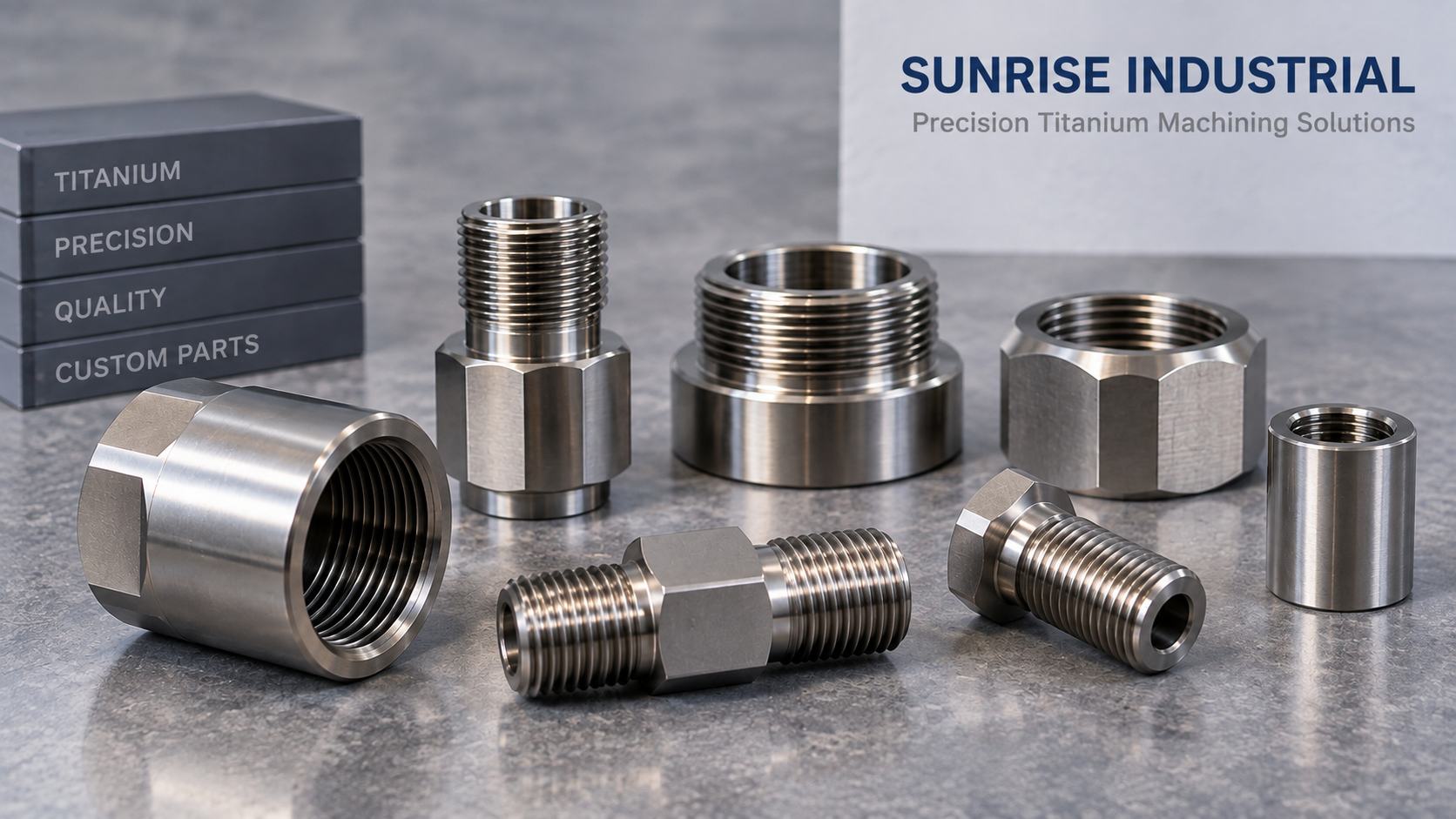
A titanium threaded part can be much more than a conventional screw or bolt. Many precision assemblies incorporate internal or external threads directly into a larger machined component.
Examples include threaded sleeves, connectors, adapters, shafts, housings, collars, flanges and other mechanical components. Some designs contain only one threaded feature, while others combine threads with precision bores, shoulders, slots, angled surfaces or complex milled geometry.
Why Titanium Threads Need Careful Machining
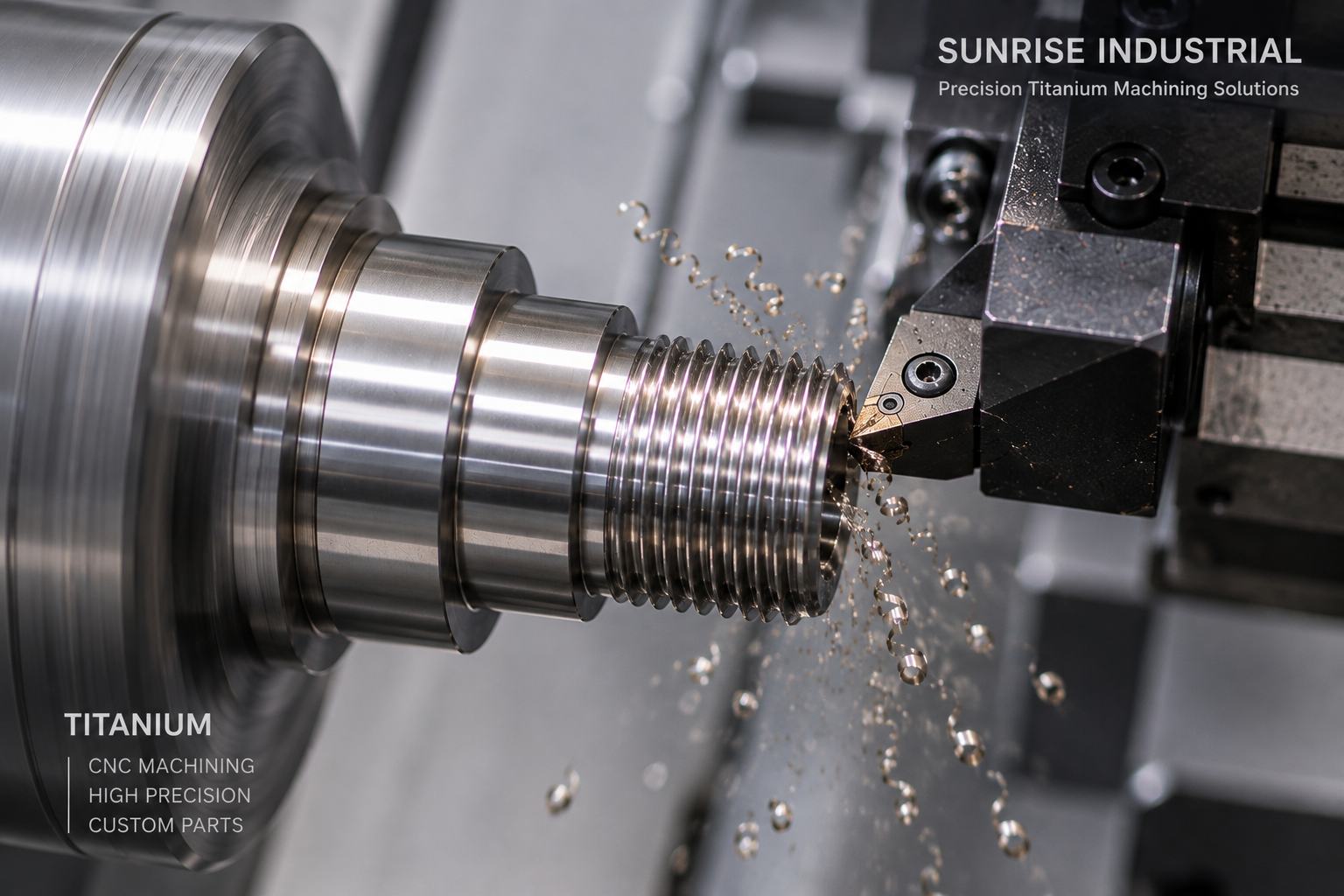
Titanium combines high strength with relatively low density and good corrosion resistance, which makes it useful for many demanding mechanical applications. However, titanium also behaves differently from free-machining steels and aluminum during cutting.
Heat tends to remain concentrated near the cutting zone, and inappropriate cutting conditions can increase tool wear or affect the quality of the thread surface. For this reason, tooling, cutting speed, lubrication and machining sequence should be selected according to the titanium grade and actual thread geometry.
Internal and External Titanium Threads
CNC Turning for Rotational Threaded Components
CNC turning is commonly used when the component is primarily rotational. Threads, outside diameters, precision shoulders, grooves and bores can often be produced in a controlled machining sequence without repeatedly repositioning the workpiece.
Typical examples include titanium threaded shafts, cylindrical connectors, sleeves, collars and adapters. When additional holes, flats or slots are required, turn-mill machining or secondary CNC milling can be incorporated into the production route.
Thread Design Should Consider the Entire Component
A thread should not be evaluated independently from the rest of the part. Tool access, wall thickness, nearby holes and the available runout area can influence both manufacturability and machining cost.
For example, a deep internal thread inside a narrow cavity may require a different approach from the same nominal thread in an open bore. Likewise, an external thread ending immediately beside a large shoulder may require adequate relief so the specified usable thread length can be achieved consistently.
Mating Fit Matters
For components that screw directly into another custom part, the relationship between both mating pieces is particularly important. The nominal thread specification provides the starting point, but the finished assembly may also depend on surface condition, coating allowance and other dimensional relationships.
When both mating components are available during development, checking them together can help identify assembly issues before repeat production. For replacement components, an existing sample may also provide useful information in addition to the formal drawing.
Protecting Threads During Surface Finishing
Many CNC machined parts receive secondary finishing after machining. Depending on the component and customer specification, this may include blasting, polishing, anodizing, black oxide on applicable materials, electroplating or other treatments.
Threaded and precision mating areas may require protection during certain finishing operations. Abrasive particles, burrs or excessive surface buildup can change the way a mating component screws together even when the original machined thread was within specification.
Manufacturing Point
When a threaded component requires secondary surface treatment, the inspection plan should consider not only the condition immediately after machining but also the condition of critical threads and mating features after finishing.
Inspection of Titanium Threaded Components
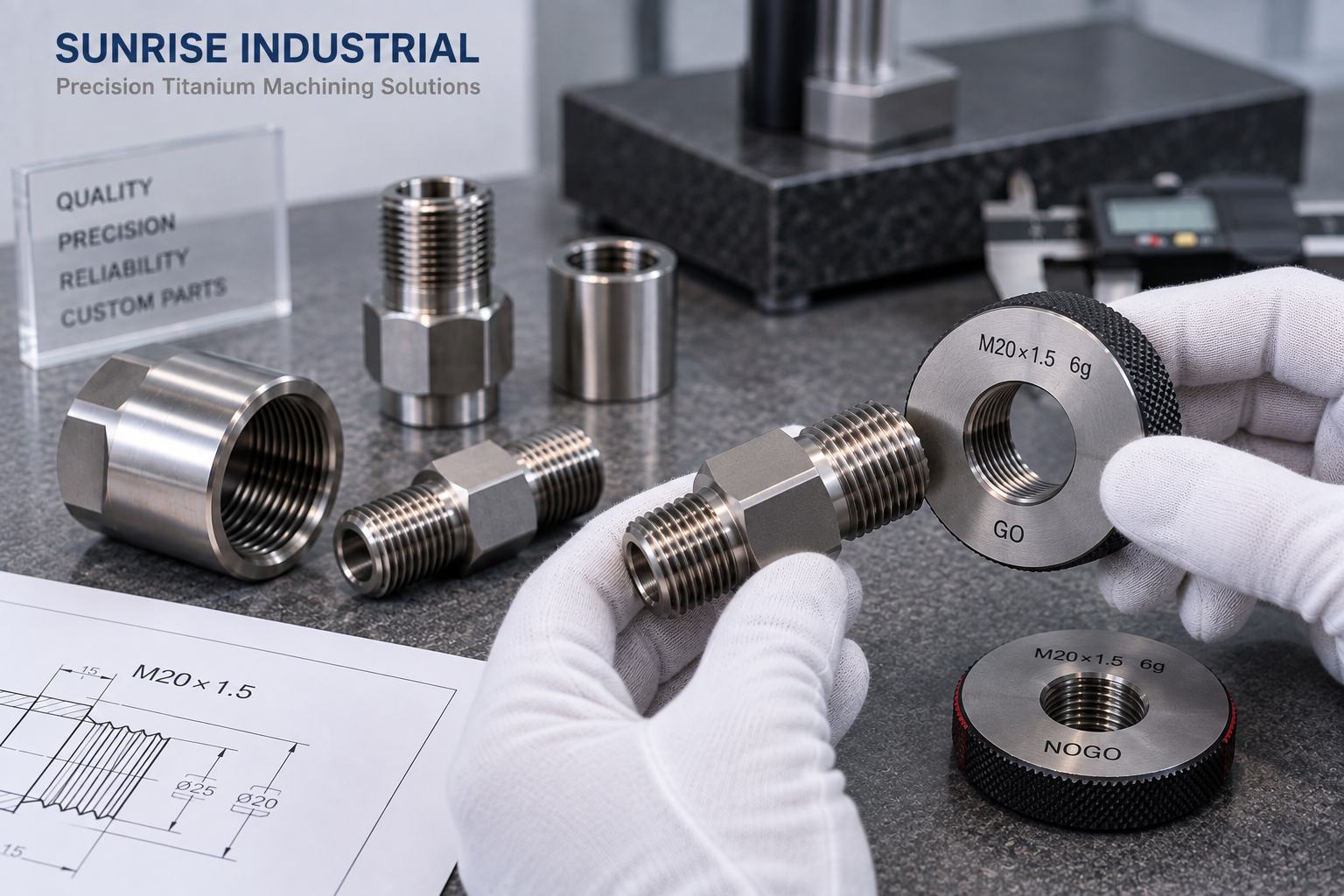
Thread inspection depends on the drawing requirement and component design. Suitable thread gauges can be used for standard specified threads, while other dimensional features may require micrometers, bore gauges, optical inspection or CMM measurement.
Inspection becomes especially important when a thread is positioned relative to a precision bore, sealing surface or assembly interface. In these cases, confirming only the thread itself may not be sufficient to verify the complete functional relationship.
Prototype and Small-Batch Production
New threaded components often benefit from prototype production before larger quantities are released. A prototype can be used to verify thread engagement, assembly position, dimensional relationships and general manufacturability.
After the design and machining route are confirmed, production can move into small or repeat batches. CNC programs, fixtures and inspection methods can then be maintained and refined for future orders.
Information to Include in a Titanium Threaded Part RFQ
A clear RFQ helps reduce uncertainty during manufacturing review. Useful information includes:
- 2D drawing and STEP model when available
- Titanium grade or material specification
- Complete thread designation and tolerance requirement
- Required quantity and expected repeat volume
- Surface finish or secondary treatment
- Critical mating dimensions or assembly requirements
Custom Titanium CNC Machining at Sunrise Industrial
Sunrise Industrial manufactures drawing-based titanium components using CNC turning, 3-axis, 4-axis and 5-axis milling, turn-mill machining and supporting processes. Our work includes threaded connectors, shafts, sleeves, adapters, flanges, prosthetic components and other custom precision parts in titanium, stainless steel and aluminum.
Need a Custom Titanium Threaded Component?
Send us your drawing, STEP file or sample together with the material, quantity and thread requirements. We can review the component geometry and machining requirements before quotation.
Contact UsAbout Sunrise Industrial
Sunrise Industrial is an ISO 9001:2015 precision CNC machining and custom component manufacturer specializing in titanium and also machining stainless steel and aluminum. We support prototype, small-batch and repeat OEM production according to customer drawings and samples.