
Pediatric prosthetic components are not simply smaller versions of adult components. Reduced dimensions, lower component weight, connection geometry and machining consistency all need to be considered when producing adapters for pediatric lower-limb prosthetic systems.
Pediatric 4-hole adapters are compact connection components used in socket-related and modular prosthetic assemblies. Sunrise Industrial manufactures these adapters according to customer drawings, samples and dimensional requirements, with custom material, hole pattern, thickness and connection details available for OEM projects.
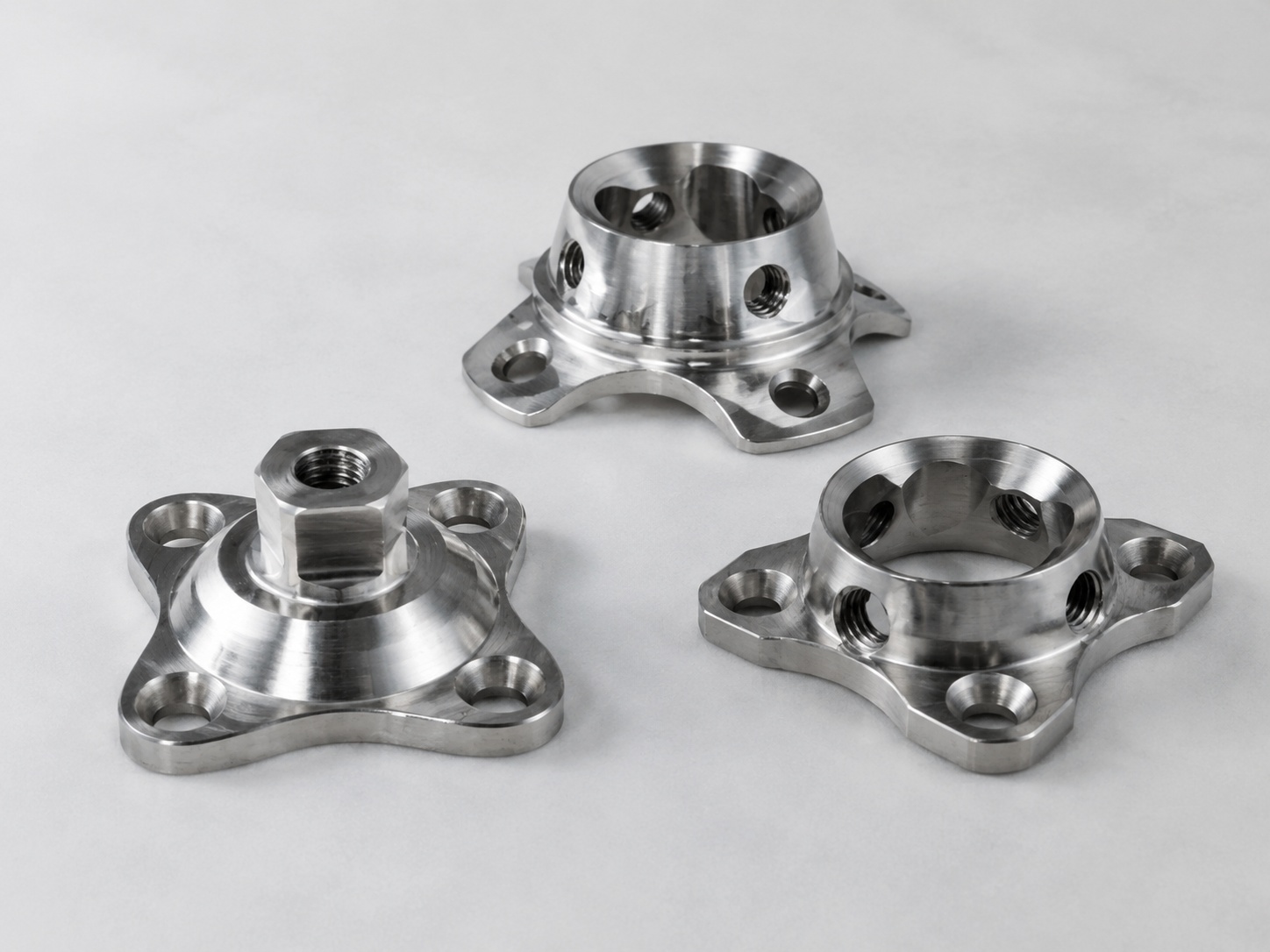
What Is a Pediatric 4-Hole Prosthetic Adapter?
A pediatric 4-hole adapter provides a compact mounting interface between related components in a pediatric lower-limb prosthetic assembly. Four mounting holes are positioned around the connection area, while the central structure can vary according to the mating component and customer design.
The overall structure may look similar to an adult 4-hole adapter, but pediatric versions generally require smaller dimensions and careful weight control. The final geometry should therefore follow the approved drawing rather than simply scaling down an existing adult component.
Why Lightweight Design Matters
Weight is an important design consideration for pediatric prosthetic components. Reducing unnecessary material can help produce a more compact component, but weight reduction should not be achieved by arbitrarily reducing wall thickness or critical connection areas.
A practical design balances component size, material selection, mounting geometry and the structural requirements defined by the prosthetic system designer. For custom projects, machining dimensions and material should always follow the customer's engineering specification.
Important Design and Machining Features
| Feature | Manufacturing Focus |
|---|---|
| 4-Hole Pattern | Hole diameter, center distance and positional consistency |
| Overall Size | Compact dimensions according to the pediatric assembly design |
| Central Interface | Accurate machining for connection with the mating component |
| Component Thickness | Controlled according to drawing and structural requirements |
| Edges and Radii | Clean transitions and controlled deburring after machining |
Material Options for Pediatric Adapters
Titanium, stainless steel and aluminum are common material options for machined prosthetic adapters, but each material offers a different balance of weight, strength, machining characteristics and surface finishing possibilities.
Titanium alloys such as Ti-6Al-4V are useful when a high strength-to-weight ratio and corrosion resistance are required. Stainless steel may be selected for designs where durability and material cost are important considerations, while aluminum is frequently considered for components where minimizing weight is a major design objective.
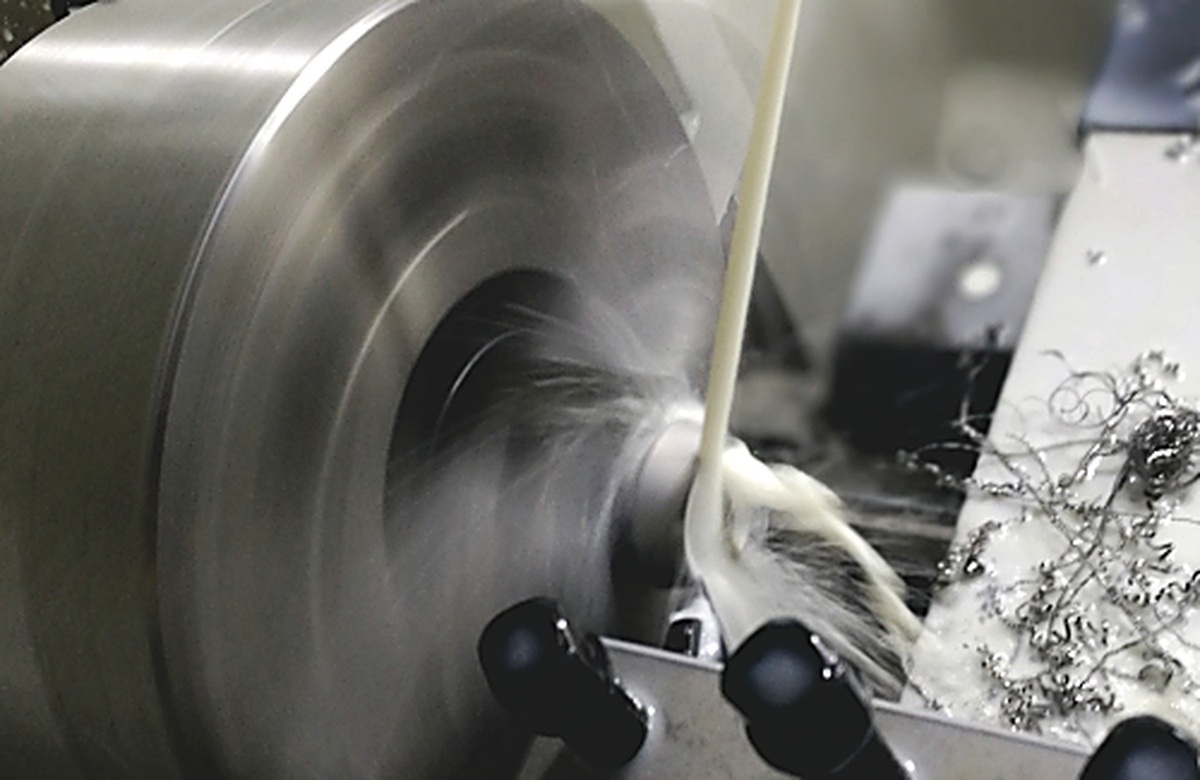
CNC Machining Small Prosthetic Components
Smaller parts do not necessarily mean simpler machining. Pediatric adapters can combine thin sections, short machining features, closely positioned holes and compact connection geometry within a relatively small component.
Stable workholding and suitable machining sequences are therefore important. CNC turning can be used for cylindrical and connection features, while CNC milling and drilling operations produce the mounting profile, four-hole pattern and other non-round details required by the drawing.
4-Hole Position and Mounting Consistency
For a 4-hole adapter, inspection should consider more than the diameter of each individual hole. Hole spacing, center position and their relationship to the central connection structure can affect how the component fits with its mating part.
In repeat production, consistent hole position also helps maintain interchangeability between batches. Fixtures, machining references and inspection methods should therefore be established according to the drawing requirements before volume production.
Typical Quality Control Points
| Inspection Item | Purpose |
|---|---|
| Overall Dimensions | Confirms the compact adapter geometry follows the drawing |
| Hole Diameter | Supports correct screw or mounting connection |
| Hole Position | Maintains compatibility with the mating component |
| Central Connection | Controls fit and alignment within the assembly |
| Surface Condition | Checks burr removal, machining marks and specified finish |
Custom Designs Instead of Simple Scaling
One important consideration when developing pediatric prosthetic hardware is that reducing every dimension of an adult adapter by the same percentage may not produce the required component. Mounting screws, connection interfaces, minimum machining dimensions and material thickness can have their own design constraints.
For this reason, Sunrise Industrial manufactures pediatric adapters according to customer drawings and specifications rather than applying a fixed scaling rule. Existing samples can also be reviewed when customers are developing or updating a component design.
From Prototype to Repeat Production
New pediatric prosthetic component projects may begin with a small number of samples for dimensional and assembly evaluation. Once the design is confirmed, the machining process and inspection references can be maintained for repeat production.
This approach is particularly useful for OEM customers who require several related pediatric adapter sizes or who need a component manufactured according to their own modular prosthetic system.
Information Helpful for Quotation
For a pediatric adapter quotation, please provide the 2D drawing or 3D model, material grade, 4-hole dimensions, connection details, tolerances, surface finish and required quantity. If the adapter must fit an existing component, mating-part dimensions or a physical sample can also help with manufacturing review.
Pediatric Prosthetic Adapter Manufacturing from Sunrise Industrial
Sunrise Industrial manufactures pediatric 4-hole adapters, pediatric 4-arm adapters, tube clamp adapters, socket adapters, pyramid adapters, receivers and other custom prosthetic components according to customer drawings and samples. Our machining capability supports prototypes, small batches and repeat OEM production in titanium, stainless steel, aluminum and other suitable materials according to project requirements.
Need Custom Pediatric Prosthetic Adapters?
Send us your drawing, sample or technical requirements for machining review and quotation.
Contact UsAbout Sunrise Industrial
Sunrise Industrial is an ISO 9001:2015 precision CNC machining and custom component manufacturer. We manufacture prosthetic components, titanium CNC machined parts, titanium dental discs, titanium sputtering targets, titanium anodes and other drawing-based components for global OEM customers.