
Custom titanium sensor housings are precision-machined enclosures designed to protect and position sensing elements, electronic assemblies and mechanical interfaces in demanding equipment. Depending on the application, a sensor housing may require threaded connections, internal bores, sealing grooves, cable openings and accurately machined mounting features.
For instrumentation manufacturers and industrial OEM buyers, the housing is more than an external cover. Its geometry can influence assembly alignment, sealing performance, component protection and the repeatability of the finished instrument.
Sunrise Industrial provides drawing-based CNC machining of custom titanium components, including housings, sleeves, connectors and other precision mechanical parts. This guide explains the design and manufacturing considerations for titanium sensor enclosures and instrument housings, from material selection to machining, inspection and OEM purchasing.
1. What Is a Titanium Sensor Housing?
A titanium sensor housing is a mechanical enclosure manufactured from titanium or a specified titanium alloy to accommodate a sensor assembly and its associated connection features.
Depending on the design, it may provide structural support, environmental protection, positioning surfaces or a connection to another equipment component.
Common housing configurations include:
- Cylindrical sensor housings with precision internal bores
- Threaded sensor bodies and end caps
- Custom pressure sensor enclosures
- Underwater instrument housings
- Sensor mounting sleeves and adapters
- Compact instrument enclosures with side ports
- Multi-feature titanium electronic housings
Each design requires its own evaluation. A housing intended for a laboratory instrument may have different sealing, dimensional and material requirements from one intended for underwater or pressure-related service.
2. Why Choose Titanium for Precision Sensor Enclosures?
Titanium is selected for certain instrument components because it offers a useful combination of corrosion resistance, relatively low density and mechanical strength.
Corrosion Resistance
Titanium forms a stable protective oxide layer under many environmental conditions. This can make it suitable for selected equipment exposed to moisture or corrosive environments, subject to compatibility assessment.
Strength-to-Weight Ratio
Titanium alloys such as Ti-6Al-4V offer high strength relative to their weight. This can be useful where an instrument requires a strong housing without excessive mass.
Dimensional and Design Flexibility
CNC machining can produce complex external profiles, bores, shoulders, threaded interfaces and other features from suitable titanium stock.
Material Selection Limitations
Titanium is not automatically the best material for every sensor enclosure. Cost, electrical conductivity, thermal behavior, electromagnetic shielding, corrosion environment and mechanical requirements must be considered. In some applications, stainless steel or aluminum may be more appropriate.
3. Grade 2 vs Grade 5 Titanium for Sensor Housings
Two common material options for custom titanium machined parts are commercially pure Grade 2 titanium and Grade 5 Ti-6Al-4V alloy.
| Property | Grade 2 | Grade 5 |
|---|---|---|
| Material Type | Commercially pure titanium | Ti-6Al-4V alloy |
| Strength | Lower than Grade 5 | Higher strength |
| Corrosion Resistance | Excellent in many environments | Good in many environments |
| Typical Selection Consideration | Corrosion-focused designs | Higher-strength structural designs |
The final material should be selected according to the customer's engineering requirements, applicable material standard and intended service environment. Material certificates and additional verification can be specified as part of the purchasing requirements.
4. Key CNC Machining Features of Titanium Sensor Housings
Sensor enclosures often combine multiple precision features within a relatively compact component. The manufacturing approach depends on the relationship between these features and the required tolerances.
Precision Internal Bores
An internal bore may accommodate a sensor element, electronic module, insert or mechanical support. Bore diameter, straightness, surface finish and concentricity may be important depending on the assembly.
Internal and External Threads
Threaded features may connect the housing to an instrument body, end cap or mounting adapter. Thread form, pitch, depth and inspection requirements should be clearly defined.
O-Ring Grooves and Sealing Surfaces
Where a sealing system is required, groove dimensions, surface finish and mating geometry must follow the approved seal design. CNC machining produces the specified features, but sealing performance must be validated at the assembly level.
Cross Holes and Side Ports
Some instrument housings contain radial openings for cables, fittings, fluid connections or mounting screws. These features may require milling, drilling or additional machine orientations.
Thin-Wall Sections
Thin-wall titanium housings require careful workholding and machining planning. Excessive clamping pressure or cutting force can cause temporary deformation and affect the finished dimensions after the part is released.
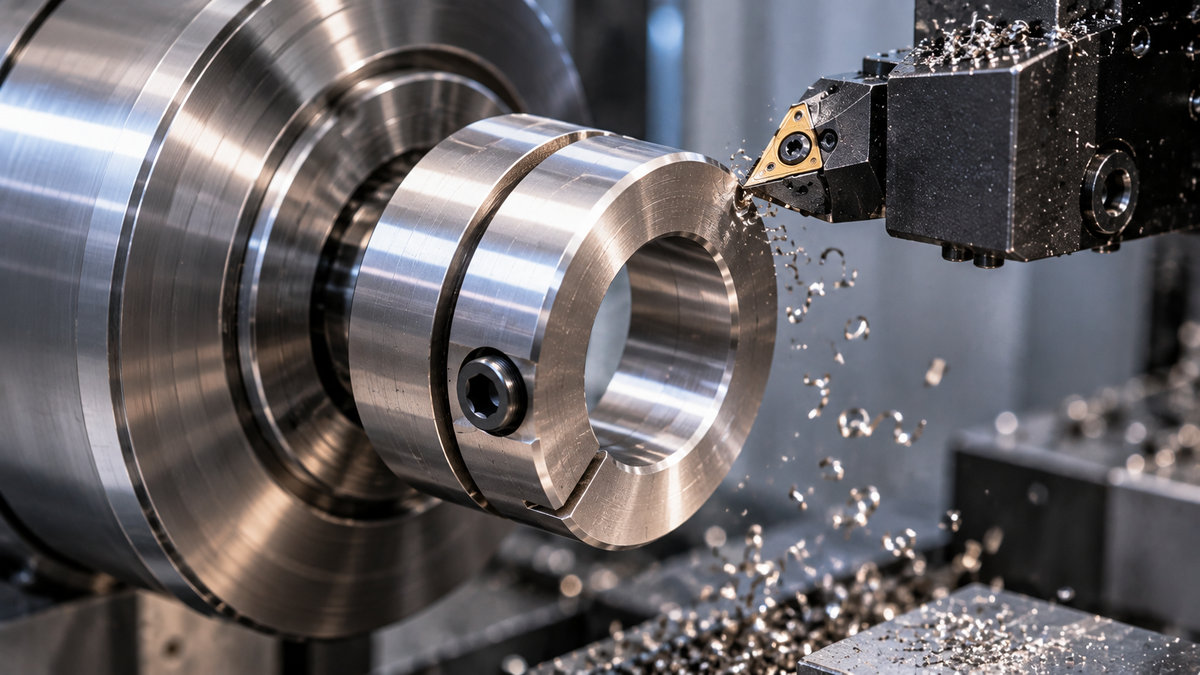
5. CNC Turning, Milling and Turn-Mill Machining
The geometry of a custom sensor enclosure determines the most suitable machining process.
CNC turning is often appropriate for cylindrical housings, concentric bores, shoulders and rotationally symmetrical threaded features.
CNC milling is used for flats, mounting slots, side holes, pockets and non-circular features.
Turn-mill machining may combine turned and milled operations for components requiring both cylindrical and angular features.
For complex housings, the process plan should consider the number of setups, datum relationships, tool accessibility, workholding and inspection requirements.
Sunrise Industrial supports CNC turning, milling, turn-mill machining and selected multi-axis operations for custom titanium components manufactured from customer drawings.
6. Deep Bores and Thin Walls: Manufacturing Challenges
Deep internal cavities and thin-wall sections can be among the more demanding features of a titanium instrument housing.
Long cutting tools may experience deflection, vibration and difficulty removing chips from the cutting area. Titanium also requires attention to heat generation and cutting-tool wear.
Possible manufacturing considerations include:
- Selecting suitable drilling, boring or internal turning tools
- Planning roughing and finishing operations separately
- Managing chip evacuation and cutting conditions
- Controlling clamping forces on thin-wall sections
- Checking critical dimensions after the part is released
- Reviewing whether extremely deep or narrow features are practical to machine
For challenging geometries, a prototype or trial machining operation may be appropriate before committing to a larger production quantity.
7. Dimensional Inspection and Surface Requirements
The inspection plan for a custom titanium sensor housing should reflect the functional requirements of the assembly rather than applying unnecessarily tight tolerances to every feature.
Depending on the drawing, inspection may include:
- Outside diameter and overall length
- Internal bore diameter and depth
- Thread specifications and engagement features
- Concentricity or positional relationships
- Mounting hole locations
- Sealing groove dimensions
- Surface roughness where specified
- Visual inspection for burrs and machining defects
Suitable measuring methods may include micrometers, bore gauges, thread gauges, optical inspection and coordinate measuring equipment when appropriate.
Specialized pressure testing, leak testing, electrical testing or environmental qualification must be defined separately by the customer. A dimensionally conforming machined housing is not automatically a qualified pressure vessel or certified sensor assembly.
8. Prototype and Small-Batch Titanium Housing Manufacturing
Instrumentation companies frequently require custom mechanical parts in prototype, development or relatively small production quantities.
A prototype housing can help engineers evaluate mechanical fit, access to internal components, assembly clearance and the practicality of the manufacturing process.
After a design is approved, repeat orders can use controlled drawings, machining programs and inspection criteria to support consistent production.
For OEM buyers, it is useful to distinguish the prototype requirements from the expected production requirements at the quotation stage. A small prototype may require a different machining and cost strategy from an ongoing batch order.
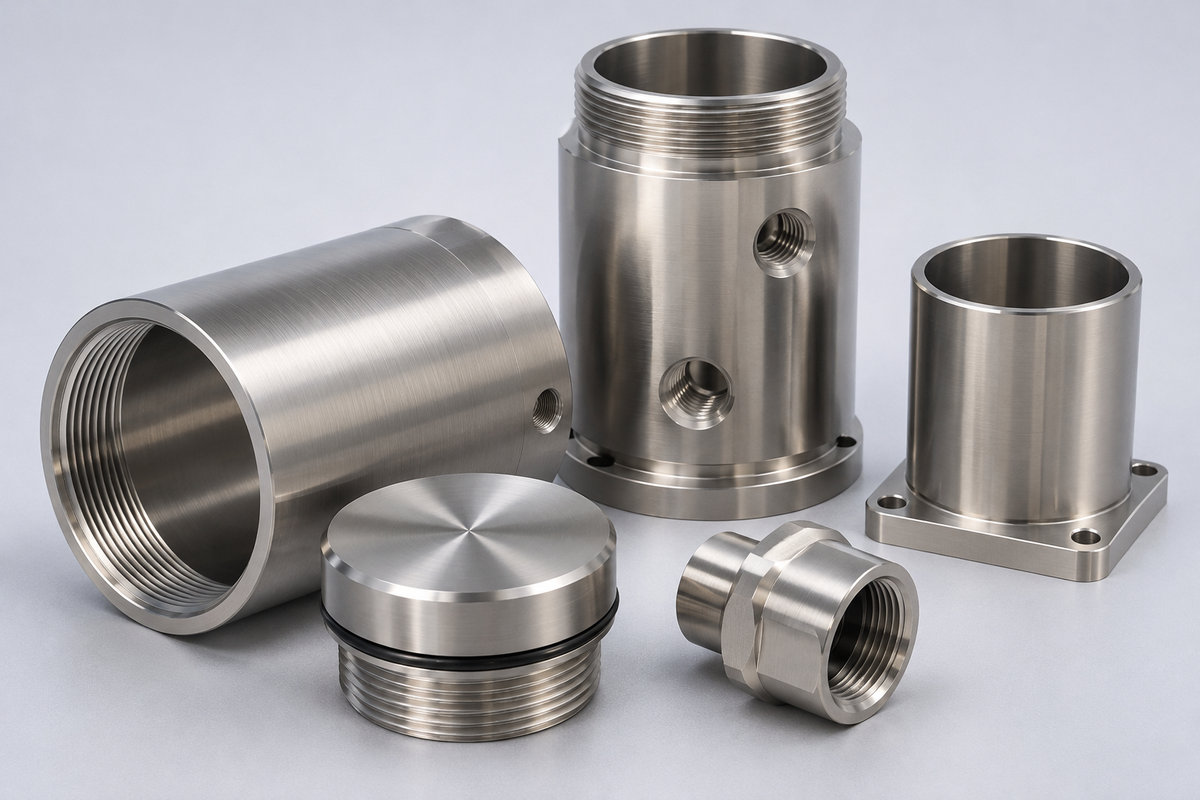
9. What Affects the Cost of Custom Titanium Sensor Housings?
The unit cost of a titanium sensor housing depends on several factors beyond its overall size.
- Material grade: Grade 2 and Grade 5 have different purchasing and machining considerations.
- Raw stock dimensions: Material size and stock availability affect cost and waste.
- Internal cavity geometry: Deep bores and complex internal features may increase machining time.
- Wall thickness: Thin sections may require special fixtures and controlled cutting strategies.
- Threads and ports: Multiple orientations and specialized tools can increase setup time.
- Tolerances: Critical dimensions may require additional machining and inspection.
- Order quantity: Prototype and repeat production have different setup-cost structures.
- Finishing and documentation: Additional processes and inspection records affect the complete quotation.
The most effective cost review usually begins with a complete engineering drawing and a clear distinction between functional and non-critical features. Design changes should be approved by the customer before manufacturing.
10. How to Request a Quote for a Custom Titanium Sensor Housing
For accurate quotation and manufacturing evaluation, OEM buyers should provide as much of the following information as possible:
- 2D engineering drawing and available STEP model
- Required titanium grade and material specification
- Overall dimensions and internal bore details
- Thread and sealing feature specifications
- Critical tolerances and surface finish requirements
- Prototype quantity and expected production volume
- Inspection and documentation requirements
- Target delivery schedule
Where a design is still under development, Sunrise Industrial can review the available technical information and discuss machining feasibility before preparing a formal quotation.
11. Custom Titanium Housing CNC Machining at Sunrise Industrial
Sunrise Industrial is a precision CNC machining manufacturer based in Xi'an, China, specializing in custom titanium components and other drawing-based metal parts.
Our manufacturing capabilities include CNC turning, CNC milling, turn-mill machining and additional machining operations for complex mechanical features.
For titanium instrument housing projects, we can review cylindrical bodies, threaded sleeves, precision bores, mounting connectors and other custom-machined features according to the customer's technical requirements.
We support prototype evaluation, small-batch orders and repeat OEM manufacturing. Sunrise Industrial operates under an ISO 9001:2015 quality management system.
Our role is to manufacture precision components according to approved specifications. Final equipment design, environmental qualification and application-specific performance validation remain the responsibility of the relevant OEM or system manufacturer.
Frequently Asked Questions
Can titanium sensor housings be CNC machined from solid bar stock?
Yes. Suitable titanium bar stock can be used to manufacture cylindrical sensor housing components through CNC turning, boring, drilling and other operations, depending on the design.
Can you manufacture custom titanium housings with internal threads?
Sunrise Industrial can review internal and external thread requirements according to the drawing, material and available machining access.
Is Grade 2 or Grade 5 titanium better for an instrument enclosure?
The choice depends on strength, corrosion environment, geometry, cost and other application requirements. The OEM should specify the material based on its design evaluation.
Can you machine deep internal bores in titanium housings?
Deep-bore machining feasibility depends on bore diameter, depth, tolerance, material and tool access. The drawing should be reviewed before confirming the manufacturing approach.
Can titanium sensor housings be used underwater?
Titanium may be suitable for selected underwater applications, but pressure resistance, corrosion compatibility, sealing and system qualification must be verified for the intended conditions.
Can Sunrise Industrial supply prototype quantities?
Yes. Prototype and small-batch CNC machining requests can be evaluated according to the design, material and production requirements.
What drawings are needed for a quotation?
A dimensioned 2D drawing and STEP file are preferred, together with material, quantity, tolerance, finishing and inspection requirements.
Need Custom Titanium Sensor Housings or Instrument Components?
Sunrise Industrial provides custom titanium CNC machining for precision housings, sleeves, threaded connectors and other mechanical components manufactured according to customer drawings.
Send us your engineering drawing, material specification, quantity and critical manufacturing requirements. Our team can review your project and prepare a quotation.
Request a CNC Machining Quote View CNC Machining Services