
Custom titanium flanges are used in industrial equipment, mechanical assemblies and specialized engineering projects where corrosion resistance, reduced weight and drawing-specific connection geometry are important. Unlike standard catalog flanges, custom CNC machined flanges may include unique outer profiles, bolt patterns, center bores, steps, grooves, threads or mounting surfaces.
Sunrise Industrial manufactures titanium flange-style components according to customer drawings, 3D models and samples. CNC turning, milling and combined turn-mill machining can be selected according to part geometry, tolerance requirements and production quantity.
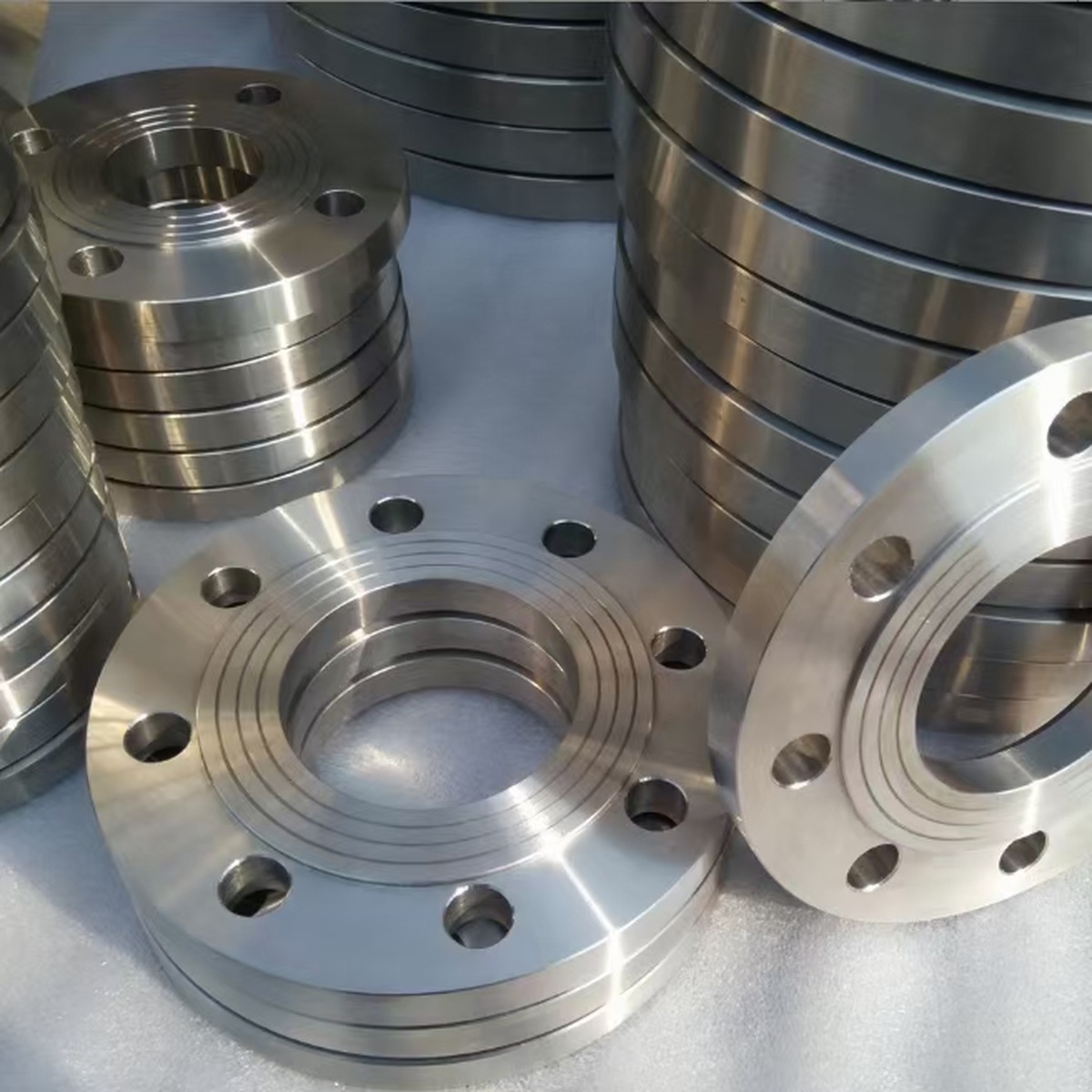
What Is a Custom Titanium Flange?
A flange is a connection component that typically provides a flat or profiled interface between two parts of an assembly. It may use mounting holes, threads, a center bore, locating features or other geometry to connect with mating equipment.
For custom titanium flange projects, there is no requirement for every component to follow one standard shape. Some parts are circular and mainly produced by CNC turning, while others combine a round body with milled flats, irregular outer profiles, slots, bolt patterns or side features.
Typical Features of CNC Machined Titanium Flanges
| Feature | Manufacturing Consideration |
|---|---|
| Center Bore | Diameter, concentricity, depth and fit with the mating component |
| Bolt-Hole Pattern | Hole size, quantity, pitch-circle position and angular spacing |
| Flange Face | Flatness, surface condition and relationship to the bore axis |
| Steps and Shoulders | Diameter, height and concentric relationship between turned features |
| Threads | Thread specification, pitch, length and assembly fit |
| Outer Profile | Round, square, lobed or drawing-specific profiles produced by turning and milling |
Why Titanium Is Used for Flange Components
Titanium is often considered for engineered flange components where corrosion resistance and weight reduction are important design factors. It can provide useful mechanical performance while allowing a component to be lighter than many comparable steel designs.
The appropriate titanium grade should be selected according to the customer's drawing, operating environment and mechanical requirements. Sunrise Industrial commonly machines commercially pure titanium and titanium alloys for drawing-based components, while final material selection remains part of the customer's engineering specification.
Grade 2 vs Grade 5 for Titanium Flanges
Grade 2 and Grade 5 are two frequently requested titanium grades, but they are selected for different reasons. Grade 2 is commercially pure titanium and is commonly considered when corrosion resistance and forming characteristics are important. Grade 5, also known as Ti-6Al-4V, provides higher strength and is widely used for precision-machined engineering components.
| Material | Typical Project Consideration |
|---|---|
| Titanium Grade 2 | Useful for projects emphasizing corrosion resistance and commercially pure titanium |
| Titanium Grade 5 / Ti-6Al-4V | Commonly selected when higher mechanical strength is required from a machined titanium component |
Material should not be substituted only on the basis of machining cost. The approved drawing, material standard and application requirements should be confirmed before production.
CNC Turning for Round Titanium Flanges
For a predominantly rotational flange, CNC turning is normally the main manufacturing process. Turning can establish the outside diameter, center bore, flange thickness, shoulders, grooves, chamfers and other concentric features from a common machining axis.
Producing these features in a controlled turning setup helps maintain the relationship between the bore, outside diameter and flange faces. Depending on the part structure, the component may then move to a secondary machining operation for mounting holes, slots or non-round features.
CNC Milling for Bolt Patterns and Custom Profiles
CNC milling is commonly required when a titanium flange contains mounting holes, counterbores, slots, pockets, flats or an irregular outside profile. The machining program can position these features according to the coordinate and tolerance requirements defined in the drawing.
For bolt-hole patterns, it is important to control not only individual hole diameter but also the positional relationship between the holes and the central bore. This becomes especially important when the flange needs to assemble with an existing housing, shaft, fixture or mechanical system.
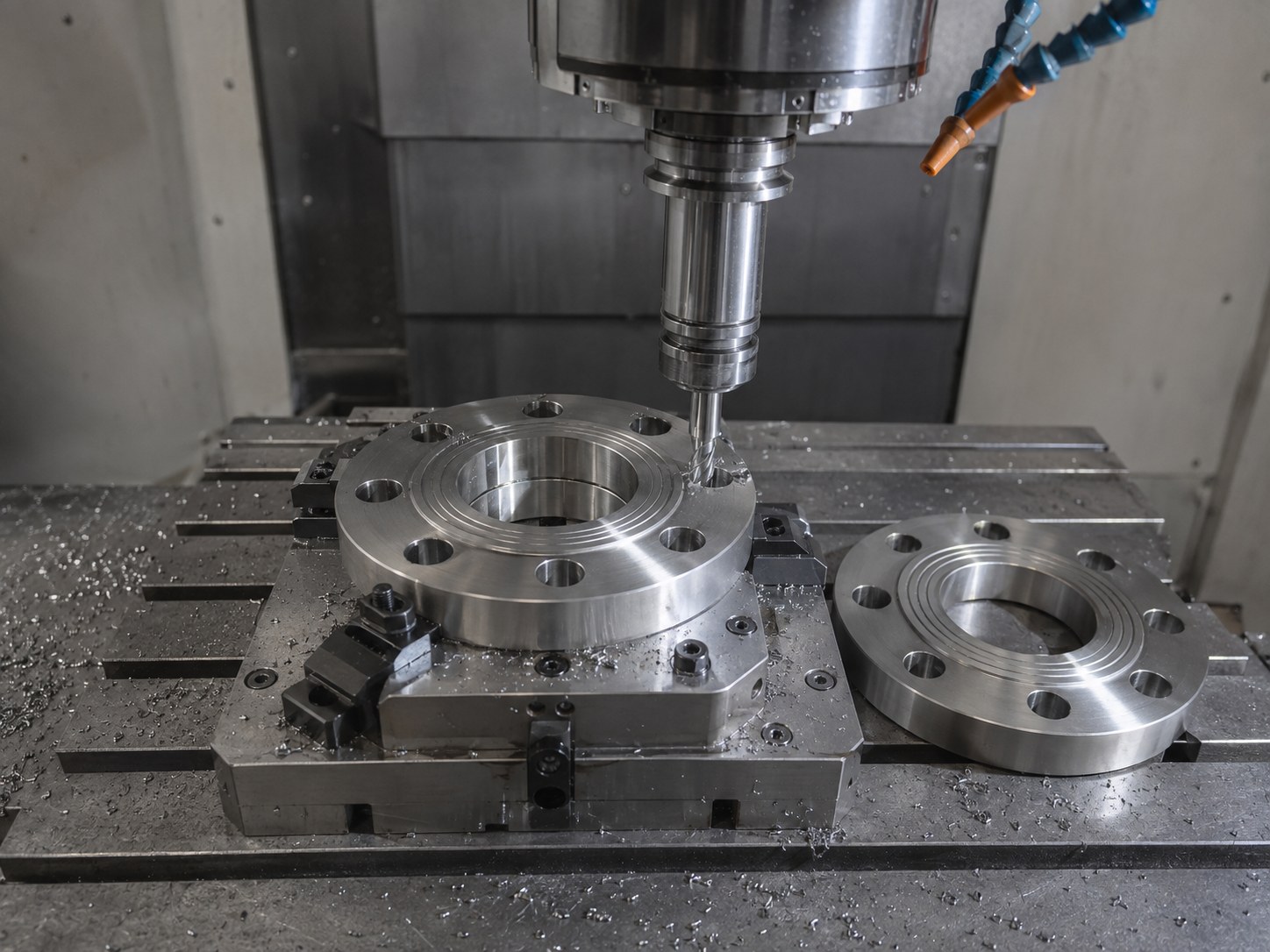
When Turn-Mill Machining Is Useful
Some custom flanges combine a large number of rotational and non-rotational features. A component may contain a precision bore and several turned diameters together with side holes, milled flats, slots or indexed features.
For these parts, turn-mill machining can reduce repeated workholding and help maintain the relationship between different features. The actual process should be selected according to component geometry, available machining access, tolerance requirements and production efficiency.
Concentricity Between the Bore and Outside Diameter
Concentricity can be an important requirement for flanges used with shafts, tubes, rotating assemblies or locating features. If the center bore and outside locating diameter are produced from unrelated setups without suitable control, assembly variation may increase.
Where practical, related diameters can be machined from the same reference or controlled through an established machining sequence. Inspection requirements should then follow the tolerance and datum system stated on the customer's drawing.
Flange Face Flatness and Surface Condition
The flange face can be an important mounting or contact surface. Depending on the assembly, the drawing may define flatness, parallelism, surface roughness or dimensional relationships between opposite faces.
A smooth-looking surface does not automatically mean that the geometric requirements have been achieved. Dimensional inspection and surface requirements should therefore be evaluated separately according to the function of the component.
Machining Thin or Weight-Reduced Flanges
Some custom titanium flanges use thinner walls, recessed areas or pockets to reduce weight and material consumption. These structures may provide useful weight reduction, but they can also make workholding and deformation control more challenging during machining.
Machining sequence, clamping force and remaining wall thickness should be considered before production. For thin components, it may also be useful to leave selected finishing operations until later in the process after the majority of material has been removed.
Threads, Counterbores and Mounting Holes
Custom flange drawings frequently include additional details beyond a simple bolt circle. Threaded holes, counterbores, countersinks, dowel holes or locating holes may all be incorporated into one component.
Each of these features should be reviewed together with its depth, diameter, tolerance and relationship to the main component datums. Where threaded features are included, thread specification and mating requirements should be clearly defined before machining.
Surface Finishing for Titanium Flange Parts
Titanium flange components can be supplied with a standard machined surface or receive additional finishing according to customer requirements. Depending on the project, finishing may include polishing, blasting, anodizing, cleaning or another specified treatment.
Precision faces, bores and threaded features should be considered before secondary finishing. If a coating or surface process could influence the final dimension, masking or machining allowance may need to be discussed during manufacturing review.
Typical Inspection Points for Titanium Flanges
| Inspection Area | Typical Check |
|---|---|
| Center Bore | Diameter, depth, tolerance and mating fit |
| Outside Diameter | Size and relationship with central features |
| Bolt Pattern | Hole diameter, pitch-circle position and angular spacing |
| Flange Thickness | Overall thickness, steps and drawing-defined shoulder dimensions |
| Faces | Flatness, parallelism or surface condition when specified |
| Threads and Details | Thread fit, counterbores, countersinks, slots and custom features |
Prototype and Small-Batch Titanium Flanges
Custom flange projects do not always begin with a large production quantity. Prototype or small-batch machining can be useful when a customer needs to confirm assembly fit, design details, machining feasibility or surface requirements before placing a repeat order.
After the design has been confirmed, machining references, tooling, inspection points and production records can be maintained to support more consistent repeat manufacturing.
Custom Flanges from Drawings and 3D Models
Custom titanium flange manufacturing should begin with clear technical information. A 3D model provides useful geometry for machining, while a 2D drawing normally defines tolerances, threads, surface finish, datum requirements and other specifications that may not be fully represented in the model.
For an existing component, a physical sample may also be useful as a reference. However, dimensions and tolerances should still be confirmed whenever possible before repeat production.
Information Helpful for Quotation
For a custom titanium flange quotation, please provide the 2D drawing and 3D model when available, titanium grade, overall dimensions, bore size, bolt-hole pattern, thread details, tolerance requirements, surface finish and quantity. Application or mating-component information can also help with manufacturing review.
Custom Titanium Flange Manufacturing from Sunrise Industrial
Sunrise Industrial manufactures custom titanium flanges, flange-style components, connectors, adapters and other CNC machined parts according to customer drawings and samples. Depending on component geometry, production can combine CNC turning, milling, turn-mill machining and other suitable processes for prototypes, small batches and repeat OEM orders.
Need Custom Titanium Flanges?
Send us your drawing, titanium grade, dimensions, tolerance requirements, surface finish and quantity for machining review and quotation.
Contact UsAbout Sunrise Industrial
Sunrise Industrial is an ISO 9001:2015 precision CNC machining and custom component manufacturer. We manufacture prosthetic components, titanium CNC machined parts, titanium dental discs, titanium sputtering targets, titanium fasteners and drawing-based custom components for OEM projects.