
A 4-arm prosthetic socket adapter is a connection component used between the prosthetic socket and other structural parts in a modular lower-limb prosthetic system. Its characteristic four-arm structure provides multiple attachment areas around the socket connection while the lower section interfaces with the next component in the assembly.
Sunrise Industrial manufactures 4-arm and 4-prong socket adapters in titanium, stainless steel and aluminum according to customer drawings, samples and project-specific requirements. CNC turning, milling, drilling and secondary finishing can be combined according to the adapter design.
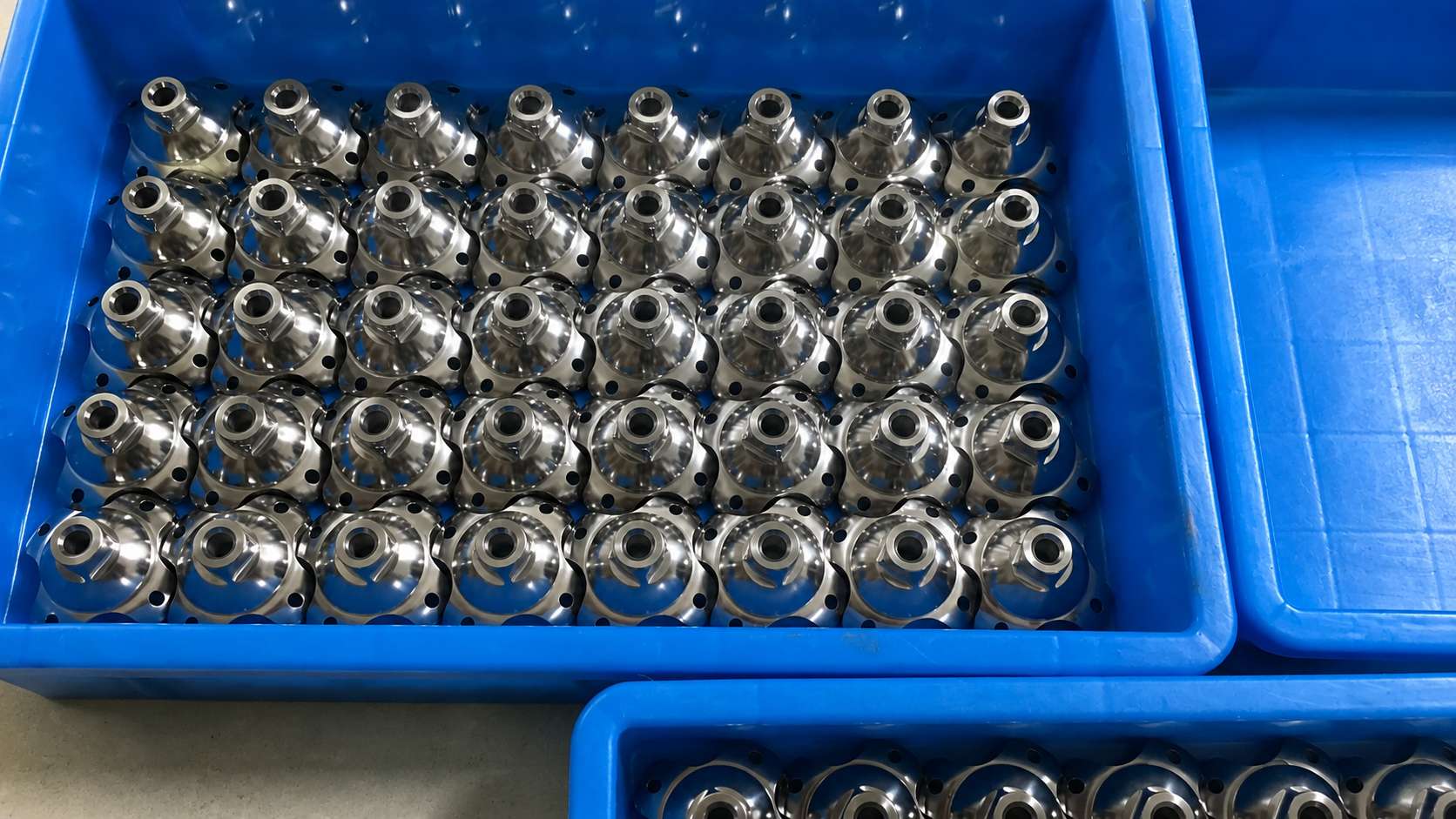
What Is a 4-Arm Prosthetic Socket Adapter?
A 4-arm socket adapter is a machined prosthetic component with four projecting arms positioned around the main adapter body. These arms provide the structural area used for integration with the socket section of a lower-limb prosthetic assembly.
The same general component may also be described as a 4-prong adapter, four-arm adapter, 4-ear adapter or prosthetic socket adapter. Naming varies between manufacturers and markets, so drawings and interface dimensions remain the most reliable basis for manufacturing.
4-Arm, 4-Prong and 4-Ear: Are They the Same?
These terms are often used for similar adapter structures. “Arm” and “prong” describe the projecting sections around the adapter, while some drawings or customers may refer to the same sections as ears.
However, similar terminology does not mean that all adapters have identical dimensions. Arm length, thickness, angle, body diameter, lower connection structure and overall height can vary considerably between designs.
Main Features of a 4-Arm Socket Adapter
| Feature | Manufacturing Consideration |
|---|---|
| Four Arms | Length, width, thickness, angle and symmetry |
| Central Body | Diameter, height and relationship to the arms |
| Lower Interface | Pyramid, receiver or other drawing-defined connection |
| Holes and Threads | Diameter, thread specification, depth and position |
| Edges and Transitions | Radius, chamfer, deburring and surface condition |
Why the Four Arms Matter
The four projecting arms distinguish this adapter from a simple circular or four-hole mounting plate. Their geometry provides multiple connection areas around the socket while maintaining a compact central adapter body.
Because the arms become part of the socket-side connection structure, their position and consistency should follow the approved drawing. Uneven arm geometry can make assembly and alignment more difficult even when the central body dimensions are correct.
Different Lower Connection Structures
A 4-arm socket adapter describes the socket-side structure, but the opposite side can use different connection designs. Depending on the prosthetic system, the lower section may incorporate a male pyramid, female receiver or another custom modular interface.
For this reason, an RFQ should identify both sides of the adapter. Two components may have very similar four-arm structures but require completely different machining operations because of their lower interfaces.
Titanium 4-Arm Prosthetic Adapters
Ti-6Al-4V is commonly used for precision-machined prosthetic adapters where the design requires a combination of strength, relatively low weight and corrosion resistance.
For a 4-arm adapter, titanium machining may combine turned reference surfaces with milled arm geometry, drilled holes and threaded features. Suitable tooling, stable workholding and controlled machining parameters help maintain consistent dimensions throughout production.
Stainless Steel Versions
Stainless steel can also be used for 4-arm socket adapters when specified by the customer. Compared with titanium, a stainless steel component of similar geometry will generally have greater weight because of the higher material density.
Material should therefore follow the approved design and project requirements rather than being substituted only on the basis of external dimensions.
Aluminum 4-Arm Adapters
Aluminum alloys are another option for selected prosthetic adapter designs where lower component weight is a priority. Aluminum also provides different machining and finishing characteristics compared with titanium and stainless steel.
The exact alloy, geometry and intended application should be confirmed before manufacturing because material selection forms part of the complete component design.
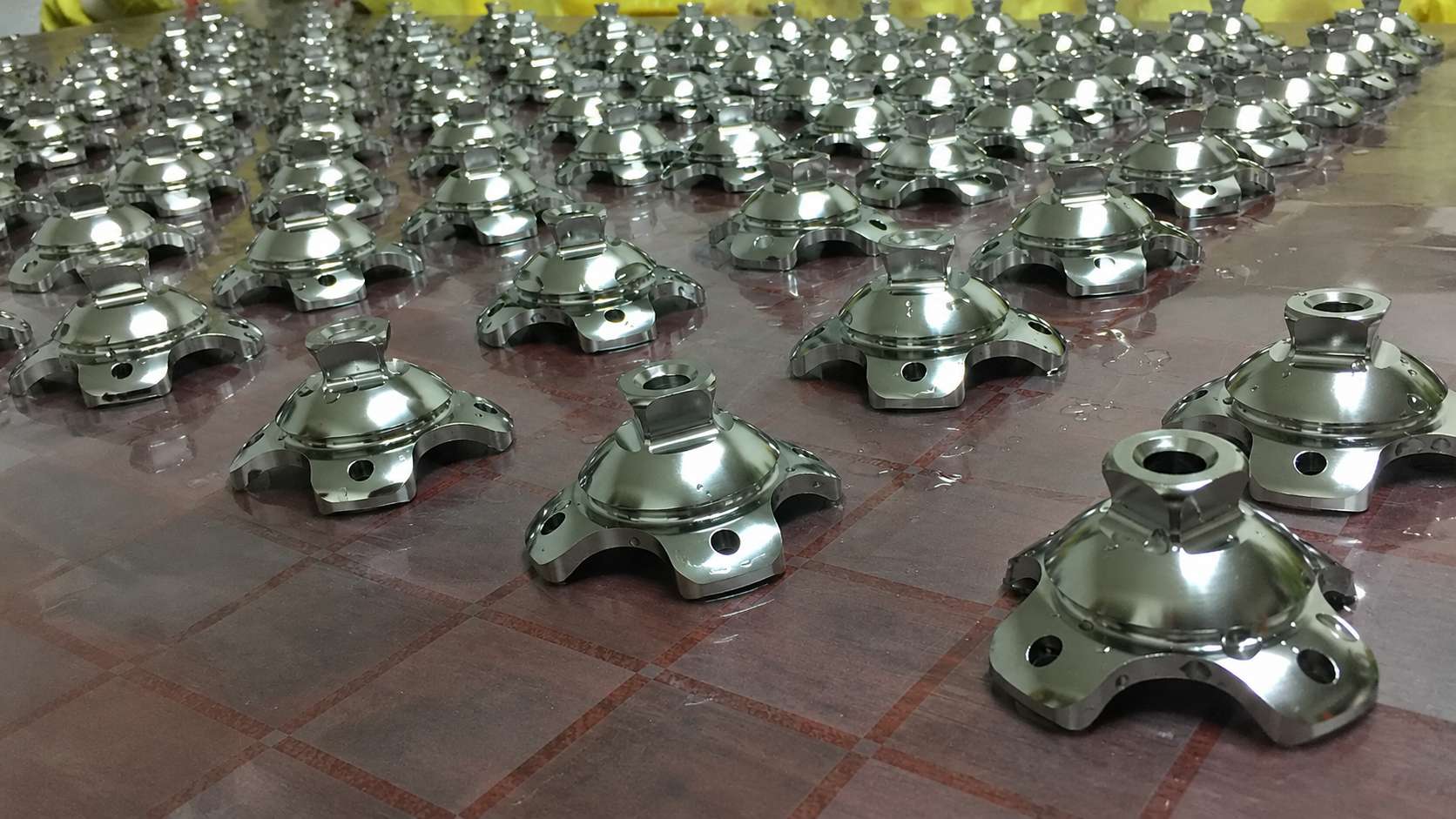
CNC Turning and Milling
Many 4-arm adapters contain both rotational and non-rotational geometry. CNC turning can establish circular reference surfaces, outside diameters, bores and selected connection features, while CNC milling produces the arms, flats, slots and other non-round details.
The exact sequence depends on component geometry. Manufacturing planning should focus on maintaining reliable reference relationships between the central body, four arms and lower connection interface.
Arm Thickness and Profile Control
Arm thickness is an important drawing dimension because the four arms should remain consistent with one another. Their profiles may be straight, tapered, rounded or otherwise shaped according to the socket design.
Milling strategies and workholding need to consider the relatively thin projecting geometry. Excessive clamping or an unsuitable machining sequence can make thin features more difficult to control.
Symmetry and Angular Position
In addition to individual arm dimensions, the angular relationship between the four arms should be maintained according to the drawing. This is particularly important when the adapter contains additional holes, flats or asymmetric connection features.
Using consistent machining datums helps control these positional relationships during prototype and repeat production.
Edges, Radii and Deburring
Four-arm adapters contain multiple edges and transitions between the arms and central body. Drawing-defined radii and chamfers should be produced consistently, and machining burrs should be removed before final inspection and finishing.
Deburring is especially relevant around drilled holes, milled slots and thin arm edges where remaining burrs can affect handling, assembly or the final surface treatment.
Surface Finishing Options
Depending on the material and customer specification, 4-arm socket adapters may be supplied with a machined finish or receive blasting, polishing, anodizing, coating or another specified secondary treatment.
Functional mating surfaces, threads and tolerance-sensitive areas should be considered before finishing because some processes can change surface condition or final dimensions.
Typical Inspection Points
| Inspection Area | Typical Check |
|---|---|
| Four Arms | Length, width, thickness and profile |
| Arm Position | Symmetry and angular relationship |
| Central Body | Diameter, height and reference surfaces |
| Lower Interface | Drawing-defined pyramid, receiver or connection dimensions |
| Holes and Threads | Diameter, position, thread size and depth |
| Surface Condition | Burr removal, machining marks and specified finish |
Prototype Development from Drawings or Samples
A new 4-arm adapter project can begin from a complete 2D drawing and 3D model. When drawings are incomplete, a physical sample and key dimensional information may also help establish the geometry required for prototype manufacturing.
Prototype production allows dimensions, mating interfaces and overall component geometry to be reviewed before larger repeat orders are released.
OEM Production and Related Socket Adapters
4-arm adapters are only one type of socket-side connection component. Related designs can include 4-hole socket adapters, rotating socket adapters, adapters with pyramid receivers and other drawing-based structures.
For customers developing a family of modular components, consistent interface dimensions and drawing references can simplify manufacturing review and repeat production across several adapter models.
Information Helpful for Quotation
Please provide the 2D drawing and 3D model when available, required material, arm dimensions, lower connection structure, holes or thread specifications, surface finish and order quantity. A physical sample can also be useful for custom or replacement adapter projects.
Custom 4-Arm Socket Adapter Manufacturing from Sunrise Industrial
Sunrise Industrial manufactures 4-arm socket adapters, 4-prong adapters, 4-hole socket adapters, pyramid adapters, receivers, tube clamp adapters, tube adapters and other modular prosthetic components according to customer drawings and samples. Titanium, stainless steel and aluminum machining is available according to project requirements.
Need Custom 4-Arm Prosthetic Socket Adapters?
Send us your drawing, material requirement, arm dimensions, connection details, surface finish and quantity for machining review and quotation.
Contact UsAbout Sunrise Industrial
Sunrise Industrial is an ISO 9001:2015 precision CNC machining and custom component manufacturer. We manufacture prosthetic components, titanium CNC machined parts, titanium dental discs, titanium sputtering targets, titanium fasteners and other drawing-based custom components for OEM projects.