
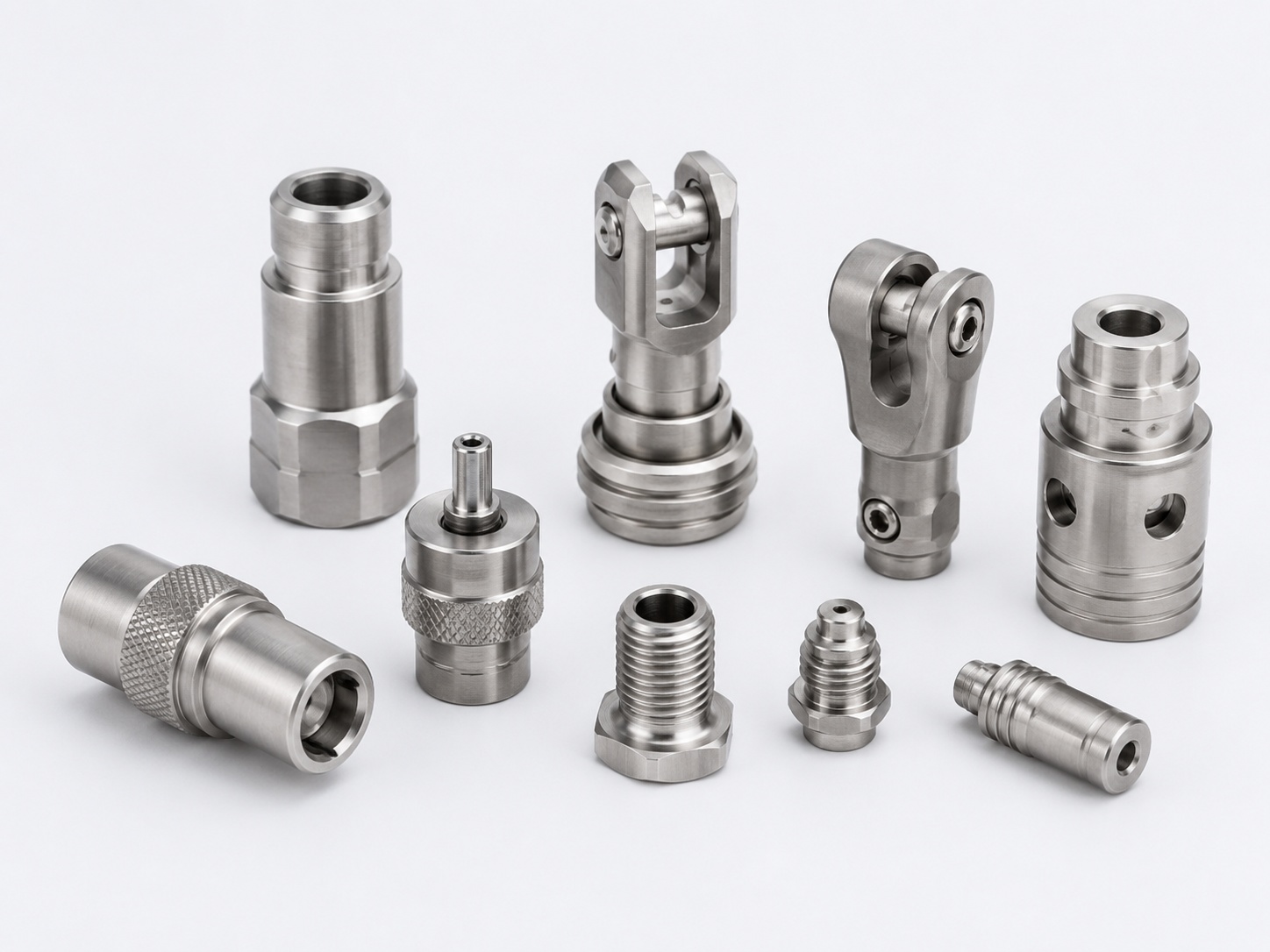
Titanium is widely used for medical-related components because it offers a strong combination of light weight, corrosion resistance, mechanical strength and excellent compatibility with demanding applications.
For custom OEM projects, successful titanium medical component manufacturing depends on clear drawings, suitable material selection, controlled machining processes and practical inspection requirements.
Why Titanium Is Used for Medical Components
Titanium alloys are commonly selected for medical and healthcare-related parts because they provide high strength-to-weight performance and strong corrosion resistance. Compared with many common metals, titanium is also suitable for applications where weight reduction and long-term stability are important.
For CNC machined medical components, material selection should always be based on the drawing, application, customer specification and applicable industry standard. The manufacturer should not guess the grade when the end use is sensitive.
For medical-related OEM parts, the RFQ should clearly state whether the component is for instruments, equipment, trial parts, external devices, implant-related assemblies or other applications.
Common Titanium Grades for Medical CNC Parts
Different titanium grades have different mechanical properties, machinability and cost levels. The final choice should be confirmed by the customer drawing or purchasing specification.
| Material | Typical Use | Machining Consideration |
|---|---|---|
| Titanium Grade 2 | Commercially pure titanium parts, lightweight structures and corrosion-resistant components. | Generally easier to machine than high-strength titanium alloys. |
| Ti-6Al-4V Grade 5 | High-strength custom titanium components, prosthetic parts and precision OEM parts. | Requires stable cutting, sharp tools and good heat control. |
| Ti-6Al-4V ELI Grade 23 | Medical-related applications requiring ELI material according to customer specification. | Material certification and traceability are especially important. |
Key CNC Machining Challenges for Titanium Medical Components
Titanium is not difficult because of shape alone. The main challenges are heat control, tool wear, surface consistency, burr control and maintaining stable tolerance during repeated machining.
Machining Risks
- Heat buildup during cutting.
- Accelerated tool wear.
- Burrs on small holes and edges.
- Surface marks caused by unstable clamping.
- Dimensional variation on thin-wall features.
Manufacturing Controls
- Use sharp and suitable cutting tools.
- Control cutting speed and feed rate.
- Design stable and repeatable fixtures.
- Plan deburring and edge finishing.
- Inspect critical dimensions during production.
Tolerance Planning for Titanium Medical Parts
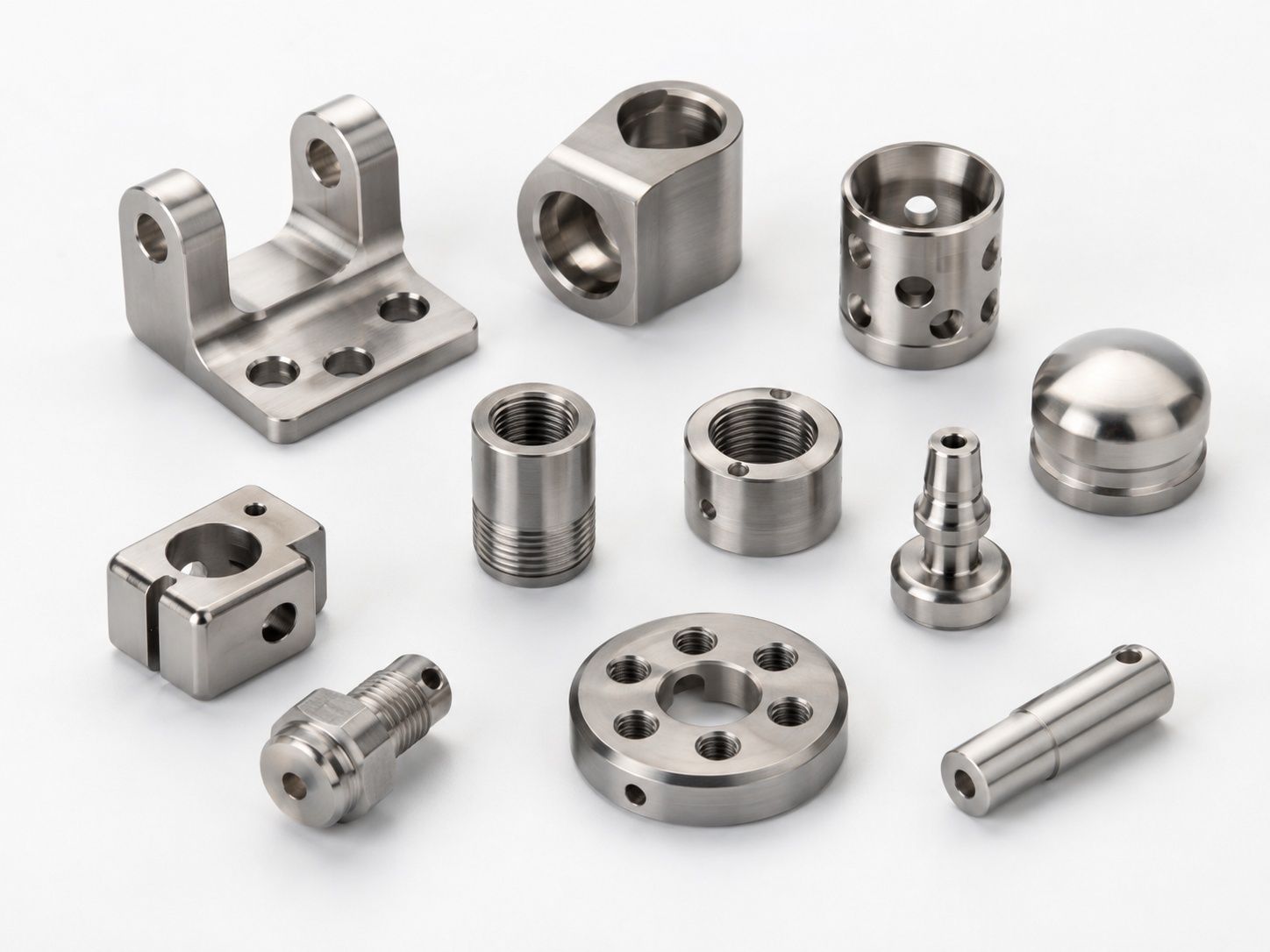
Not every dimension requires the same tolerance level. A practical drawing should separate functional dimensions from general dimensions. This helps control cost while keeping the important features accurate.
| Feature | Why It Matters | RFQ Suggestion |
|---|---|---|
| Mating Diameter | Affects assembly fit and functional stability. | Mark as critical if fit is important. |
| Threaded Hole | Affects fastening strength and assembly reliability. | Specify thread size, depth and inspection method. |
| Thin Wall | Can deform during clamping or machining. | Confirm minimum wall thickness and fixture approach. |
| Sealing Surface | May require controlled roughness or special finishing. | Clearly define surface roughness requirement. |
Surface Finish and Deburring Requirements
Surface condition is especially important for titanium medical components. Burrs, sharp edges, tool marks or uncontrolled roughness may affect assembly, cleaning, handling or final product appearance.
Common finishing options may include machining finish, polishing, bead blasting, passivation-related processing according to customer requirements, or other specified surface treatments. The exact process should be confirmed before production.
Inspection Information Buyers Should Provide
Inspection requirements should be clear before quotation. This helps the supplier estimate inspection time, select suitable measuring tools and avoid misunderstanding after production.
Recommended RFQ Checklist
- 2D drawing with revision number.
- 3D model such as STEP file.
- Material grade and required standard.
- Critical dimensions and tolerance requirements.
- Surface roughness and edge requirements.
- Quantity for prototype and production order.
- Inspection report or material certificate requirement.
- Packaging, cleaning or marking instructions.
Prototype and Production Considerations
Prototype orders are useful for verifying geometry, fit, assembly and manufacturing feasibility. Once the design is approved, production planning can focus on fixture optimization, cycle time improvement, batch inspection and stable repeatability.
For titanium medical components, it is better to solve drawing questions during the prototype stage rather than after mass production begins. Small changes to radius, wall thickness, thread depth or surface finish may significantly affect machining time and cost.
Sunrise Industrial Titanium Medical Component Support
Sunrise Industrial supports custom titanium medical component machining according to customer drawings and specifications. We can help review manufacturability, material selection, tolerance requirements and production feasibility for prototype and batch orders.
Our manufacturing capabilities include CNC turning, CNC milling, 4-axis machining, 5-axis machining, wire EDM, laser cutting, grinding, surface finishing coordination and dimensional inspection support.
Conclusion
Titanium medical components require more than basic CNC machining. Buyers should confirm material grade, drawing requirements, tolerances, surface finish and inspection expectations before production starts.
A clear RFQ package helps reduce communication delays, improve quotation accuracy and support reliable manufacturing results for custom OEM titanium parts.
Need Custom Titanium Medical Components?
Sunrise Industrial can manufacture precision titanium medical components, prosthetic parts and custom OEM CNC machined parts according to your drawings, material requirements and inspection standards.
Send Your RFQ View CNC Machining ServicesAbout Sunrise Industrial
Sunrise Industrial is an ISO 9001:2015 certified manufacturer specializing in precision titanium machining and custom OEM manufacturing. We produce titanium prosthetic components, titanium medical components, titanium dental discs, titanium sputtering targets, titanium fasteners, titanium 3D printing solutions and custom CNC machined parts according to customer drawings and specifications.